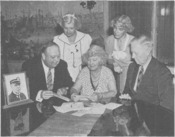
AN INTERVIEW WITH THE DISTINGUISHED PIANIST
OSSIP GABRILOWITSCH
SECURED ESPECIALLY FOR THE ETUDE BY EDWIN HUGHES

 [Editor's Note.—Interviews with Mr. Gabrilowitsch have appeared in previous issues of The Etude and have always pleased our readers greatly. His interest in American musical matters has been augmented by many successful American tours and by the fact that he married a daughter of our own "Mark Twain" (Samuel S. Clemmens). The subject is an especially interesting one in this case, since Mr. Gabrilowitsch is noted for his exceptional memory. Last year in Munich he played nineteen of the most noted concertos from memory at six concerts. These concertos illustrated the development of this form of composition and in order that our readers may appreciate the extent of this work when merely considered from the memory standpoint we give the entire list. 

 
J. S. Bach      Konzert in G minor. No. 15
Mozart    Concerto in D minor (K. V. 4G6)
Beethoven     Concerto in C minor
Beethoven     Concerto in G major
Beethoven     Concerto in E flat
Weber  Concertstück
Chopin  Concerto in E minor
Mendelssohn   Cappriccio Brillant
Schumann   Concerto in A minor
Liszt      Concerto in E flat
Rubinstein     Concerto in D minor
Tchaikowsky     Concerto in B flat minor
Brahms     Concerto in D minor
Brahms     Concerto in B flat major
Franck               Variations Symphoniques
Saint-Saëns  Concerto in C minor
R. Strauss     Burleske
Rachmaninoff      Concerto in C minor
 
Statisticians might be foolish enough to point out that a pianist in performing a series like this in a little over a month and a half retains something like a million notes in the memory, but as a matter of fact when it is remembered that the virtuoso must bear in mind not merely the notes but the serious interpretation of an art work and the orchestral accompaniment as well it will be realized that he does something vastly more taxing to the intellectual powers than the mere repetition of a prodigious number of notes. Mr. Gabrilowitsch's accomplishment places him in a class with von Bülow, Toscanini, Weingartner and others with remarkable musical memories and unquestionably makes the following interview much more interesting.]
 
 
MEMORIZING AND THE PIANIST.
Musical memory from the pianist's point of view is a much more complicated and extensive matter than for any of his other musical brethren. In the first place more is expected of the pianist in this respect nowadays than of the player on any other instrument or the singer, and in the second the memorizing of piano compositions is a far more difficult matter than learning by heart pieces for the voice or the other instruments. A song may contain, let us say, eighty notes, while a piano piece of the same length will average perhaps four hundred, or ten times as many.
 
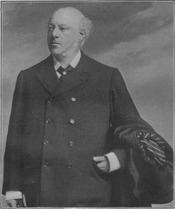
ossip-gabrilowitsch.jpgTHE EASIEST WAY TO MEMORIZE.
I find that the easiest and quickest way of memorizing at the piano is to practice a composition in the morning without any thought of learning it by heart at the time, then in the afternoon to attempt to go over it mentally, away from the instrument. Before beginning to memorize one must have somewhat of a grasp of the piece as a whole, must realize what it is all about, know its subdivisions, and so forth. Difficult passages must be gone over thoroughly until the fingers are perfectly familiar with them. Then one can study the piece from the notes, away from the piano, endeavoring to have it impress itself thoroughly upon the mind. When one goes for a walk this mental exercise may be continued, until one is perfectly familiar with the composition without any contact with the instrument at all.
 
Another means of memorizing is to take a composition to pieces, after one has first played it through to get an idea of it as a whole, dividing it up into its phrases and periods and learning slowly step by step. This means of learning by heart I would not recommend when it comes to a question of getting a piece memorized in a short time, just before a concert engagement, for example. The first method is by far the quicker, and also I think, the surer of the two.
 
VISUAL MEMORY.
In the matter of memorizing at the piano finger memory and visual memory play the most important part. Very much must always be left to the fingers, for in playing more rapid compositions, as for example, some of the Chopin Etudes, it is quite impossible for the mind to follow each individual note. Among the different ways of memorizing, I should give to visual memory the first place. One must be able to bring the printed page before the mind's eye at any point in the composition. I cannot emphasize the importance of visual memory enough in the learning of musical compositions, I have never pushed the matter of memorizing to the extent of trying to say over to myself every single note in a composition, for, as I have said, the mind cannot follow the fingers quickly enough in rapid passage work, so that this method would not be so practical as the others I have mentioned.
 
THINKING AHEAD OF THE FINGERS.
When I play I hear and think the piece ahead of my fingers, but I do not try to find the notes by ear on the keyboard, although I think I could do so if necessary. There come times in public performance when one suddenly becomes nervous and wonders perhaps what comes eight bars ahead. In such a predicament one cannot depend with any safety on his finger memory alone, but must also have that surety which comes from being able to go over a piece mentally without either the piano or the notes.
 
It is utterly impossible to say, or solfeggio the notes of a rapid composition in either English or German. In French, using the method of solfeggio in which la, for example, answers for either a, a-flat or a-sharp, it is possible for practiced persons to solfeggio quite rapidly, for here we have a series of short syllables, always a consonant followed by a vowel, with the exception of sol, where there is a second Consonant at the end. But even with the French solfeggio I doubt if anyone could say very fast passages up to tempo and correctly. I also doubt whether this ability would be of much real use in the memorizing of pianoforte music.
 
PICTURING THE NOTES.
As an example of the importance of visual memory, let us imagine that one is hearing a new opera for the first time. A phrase or a succession of chords comes which is of striking beauty. The next day at the piano one tries to reproduce the phrase, and if one has only trusted to the ear to remember it, often the attempt is a failure. But, if at the time of hearing the phrase one has tried to visualize it also, to picture to one's self how the notes would look on the printed page, the effort to reproduce the music later is quite sure to turn out successfully.
 
A good knowledge of harmony is absolutely necessary for intelligent memorizing. It is remarkable how many piano pupils are completely deficient in this respect, even when they are so advanced as to be able to play quite difficult compositions. Nothing is more common than to meet with piano students who stare at you blankly when you speak of a chord of the sixth. I always advise piano students to pursue the study of harmony diligently.
 
The study of the design of a composition is of great importance in memorizing, particularly the design of phrases and periods. Two phrases may for example be repeated, the second containing a variant in the repetition; or there may be four measures based on a certain figure in the left hand, followed by two measures in which a slight change is made in the figure, and then again two measures with a further change. Such analytical work as this helps to impress the composition on the mind and is of great importance in memorizing.
 
Mental concentration plays of course a most important role in learning by heart, as does also the state of one's physical health and the fact of whether or .not one suffers from nervousness, general fatigue or insomnia. Age has also much to do with the matter of memorizing. The compositions learned early in life always show much more readiness to stick by one than those acquired later on, when one forgets more easily. For this reason one should seek to acquire as large a repertory as possible during younger years.
 
For one who plays much in public, journeys on the train from one city to another offer an excellent opportunity for the mental practice of one's repertoire.
 
TALENT IN MEMORIZING.
When a pupil does not memorize easily it is a sure sign that he has little or no talent in this direction, and I am not at all in favor of the idea of requiring such pupils to play without their notes. This idea of forcing the memory is unfortunately quite a general one among most piano teachers. How much better it is to hear a piece played well with the music than badly without it by a pupil who has little talent for' learning by heart.
 
In order to keep a repertory of pieces all going at the same time the pianist should have a weekly practice schedule, working at certain compositions on certain days and "brushing up" those which need it. This is my plan during the summer months, but during the season I find it impossible to work so systematically on account of my many engagements. At this time the important question is that of always being thoroughly prepared with what one has to play at the next concert, and I find little extra time for work on repertory.
 
EARLY MEMORIZING.
Of the nineteen concertos which I played last season during my series of concerts illustrating the development of the piano concerto I find that I keep those most easily in mind which I learned early in life. If I were to repeat the series now I should probably have to do very little work in the way of memorizing with most of them, except with those which I have recently added to my repertory. This season, for example, I played the Weber Concertstück once again, a piece which, strange to say, I had never studied in my earlier years. I found that I had to do quite a bit of re-memorizing before I felt perfectly sure that I could go through the piece without any slips.
 
MEMORIZING ORCHESTRAL SCORES.
The custom of performing everything by heart I have carried over also into my work as orchestral conductor, where I rarely ever use a score. In my opinion the conductor who directs without his score has an immense advantage over one who uses his music, for the most important thing in successful orchestral conducting is that one should have his eye on the men every moment of the time. The conductor who has his eyes on the score most of the time has not half the control over his men that one has who knows his score well by heart. Toscanini, of the Metropolitan Opera House in New York, has even carried the matter so far as to conduct not only whole operas without referring to the notes but even to conduct all rehearsals without a score.
 
In the study of scores I find again that visual memory, the ability to recollect how the notes look on the printed page, is of the very first importance. Without the aid of visual memory it would be quite impossible for me to commit to memory works for orchestra.
 
AN EXPANSIVE FACULTY.
The faculty of memory is not at all limited by the amount one has memorized; on the contrary it is an expansive faculty. The more one has memorized and the more one utilizes his faculty for memory the more can one retain in his mental grasp. The idea that one loses part of the material memorized on account of the addition of much new material is an incorrect one.
All the necessary news of the musical world told concisely, pointedly and justly
 
 
At Home
 The contract of Gatti Casazza as manager of the New York Metropolitan has been renewed for three years dating from 1915.
 
A performance of the Elijah was recently given at the New York Hippodrome by the New York Festival Chorus under the direction of Tali Esen Morgan. The chorus consisted of 1,000 voices.
 
The funeral recently took place in Pater- son, N. J., of Mrs. Maria Ammarano. She was the sister of Caruso's mother, and was a great favorite with the distinguished tenor, who was one of the mourners.
 
The Cincinnati Symphony Orchestra under Dr. Ernst Kunwald recently paid a visit to Cleveland with Harold Bauer as soloist. There was great enthusiasm displayed at the concert.
 
Performances of Peer Gynt have been given at the Royal Theater, Berlin, and in honor of the event Mme. Grieg, the widow of the composer, was invited to attend. She was also the guest of the Kaiser during her visit.
 
Katharine Kulp Hall, a brilliant musician and a woman of highest ideals, died at St. Louis on March 8th last. For many years she was associated with her husband, William J. Hall, in his work as a singer, teacher and organist.
 
A vaudeville entertainment was given recently by the Benificent Society of the New England Conservatory of Music in aid of the society. The purpose of the society is to assist needy and deserving students of the conservatory.
 
At a concert given by the St. Louis Symphony Orchestra in honor of Washington's birthday a performance was given of E. R. Kroeger's Lalla Rookh suite. This suite has been played by many of the leading orchestras and is steadily gaining in popularity.
 
B. M. MacDowell, an able teacher of over 42 years experience, died Thursday, March 5th, at his home in Columbus, Ohio. He was a pupil of Eugene Thayer, the noted organist. His son, J. B. Francis MacDowell. is a successful teacher and organist of Columbus.
 
It is reported that a verdict in favor of Oscar Hammerstein for $25,000 and an additional penalty of $5,000 was ordered in the Supreme Court of New York in the impresario's suit for breach of contract against Florencio Constantino, the tenor.
 
An unidentified lady of wealth who lives on Staten Island recently offered a prize of $5,000 to be spent on a vocal training by any American girl who could pass a test provided by Ellison van Hoose. There were two hundred and fifty competitors and the prize was won by Almo Dwinell, of New Brighton, Staten Island.
 
During a recent Philharmonic concert at Carnegie Hall, says The New Music Review, a performance of Victor Hugo's Les Misérables with moving pictures and organ accompaniment was being given in the Carnegie Lyceum. An usher, stationed at the entrance, announced in stentorian tones, "Philharmonics upstairs, the less miserables downstairs !"
 
There is a rumor abroad that Andreas Dippel will be associated with the Century Opera Company in a plan to provide a chain or opera houses through the leading cities of America. Dippel, it will be remembered, was for a time a co-manager with Gatti-Casazza at the Metropolitan, and also manager of the Philadelphia-Chicago Opera Company.
 
The Century production in English of d'Albert's Tiefland proved interesting, though the critics do not seem to think the work will gain popularity in this country. It will be remembered that the work was first heard at the Metropolitan in 1908. and even at that time the New Yorkers evinced no great interest in it. Tiefland, however, is exceedingly popular in Germany.
 
A concert for the benefit of the Music School Settlement for Colored People in New York was recently given at which colored composers conducted their own works. Harry T. Burleigh was the presiding spirit, and in addition to conducting works of his own, also conducted works by S. Coleridge-Taylor, the famous Anglo-African composer, whose early death was so deplorable. Some of the other works also proved very interesting.
 
The death of Marie Jansen will be much regretted by those who enjoyed her in The Beggar Student when it was produced by Colonel McCaul in New York over thirty years ago. Charles Wyndham took her with him to London to take the title role of Feather- brain. On her return to America she became associated with Francis Wilson, appearing in Ernani and many other favorite operas. In private life her name was Hattie Johnson, and she was born in Boston sixty-five years ago.
 
Los Angeles has many claims to consideration, but one of its latest is that it is the home of the California School of Artistic Whistling. A butterfly recital was recently given in the Auditorium, which holds 3,000 people. It was packed from floor to gallery with a throng of people who were doubtless curious to know how a butterfly whistles. The butterflies appear to have whistled and danced very charmingly, however, as the audience proved highly enthusiastic.
 
A meeting of widely representative business men and musicians was recently held in Detroit to consider the organization of a Detroit Symphony Association. A number of prominent men agreed to act as trustees of the organization, and the Detroit Symphony Association is now an assured fact. Our readers will be interested to know that one of the prime movers in the matter was Mr. N. J. Corey. whose wise conducting of the "Teachers' Round Table" department of The Etude has been so widely appreciated.
 
The death has occurred of Arthur Burgoyne, music critic, and professor of musical history and æsthetics at the Carnegie Institute of Technology, Pittsburgh. He has also been identified with newspaper work in the smoky city for many years, and one of his daily duties was to write a poem on some current subject. He was a graduate of Trinity College, Dublin, and was a man of wide learning, a fine linguist, and the beloved friend of many people, musicians and otherwise.
 
Brown University will be one hundred years old in October of this year, and quite naturally the institution has planned an unusual "program of exercises," ranging from torchlight processions to organ recitals. The Mendelssohn Club of New York is also to give a concert. In fact music has been given a very worthy part in the program. One feature of a very unique character will be a dramatic performance of The Provoked Husband, or a Journey to London, said to have been the first play ever to have been produced in New England.
 
Very good work has been done in New York this winter at the Sunday evening concerts inaugurated by the People's Institute in the great hall of Cooper Union. Admission to these concerts is entirely free, and a high musical standard is consistently maintained. The director of the concerts is Walter L. Bogert, and among the soloists who have appeared during the past season are Albert Quesnel, Heinrich Meyn, Francis Rogers, Ellison van Hoose, Albert G. Janpolski. Frederick Martin, Franz Kaltenborn, Jacques Kasner, von Ende, Carolyn Beebe and Ada Sassoli.
 
The Russian opera Boris Godounov, the work of the crazy genius Moussorgsky, has been given quite frequent performances since it was first heard in America a year or so ago. It has recently been given in Philadelphia, and now comes news that it has been given in Buda-Pesth. Considering that the work is thirty years old or more, it is astonishingly modern, foreshadowing many of the most recent achievements of such workers as Scriabine and Debussy. Of course this may be due to some extent to the assistance which Rimsky-Korsakoff gave the composer, but, nevertheless, the work is sufficiently individual to justify the keen interest in it which musicians have displayed. Unfortunately the nature of the work does not favor a successful arrangement of the score or themes for the piano.
 
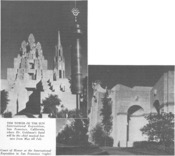
The energetic press bureau of the Panama Pacific International Exposition, to be held at San Francisco in 1915, has been filling The Etude pigeon holes with information regarding projects of a musical kind. Visitors to the exhibition will hear choruses of five thousand girls and boys, May-pole dances, choruses of Oriental children, a meeting of the supervisors of music from all parts of the Union, performances of The Messiah, Elijah and St. Paul, orchestral concerts of all kinds, band concerts—what more can we say? The press bureau furnishes us with a complete equipment of adjectives, but owing to lack of space we herewith permit our readers to supply their own with the feeling that they may be quite as appropriate as those of the hereinbefore mentioned press bureau.
 
On March 4th, Benjamin Dwight Allen, one of the best known of the older musicians of New England, died at Wellesley, Mass. He was born at Sturbridge, Mass., February 16, 1831. His teachers were R. S. Hambridge and Richard Eastcott, of the Royal Academy of Music, London. He taught in many well- known institutions, including the New England Conservatory, Boston University, Beloit College and the Teachers' College of Columbia University. He was one of the founders of the American Guild of Organists and a member of the Harvard Musical Association. He was the teacher of Prof. C. H. Farnsworth, of the Teachers' College, Columbia University, and W. W. Sleeper at Wellesley.
 
The many friends of Edward Baxter Perry, the well-known pianist and lecturer of Boston, whose articles on musical topics have often appeared in The Etude, will be pleased to know that the present season has been one of the best and most successful he has ever had. He has filled engagements in nearly every State east of the Rocky Mountains, playing six nights per week nearly all the time since November 1st. It is gratifying to note that an American pianist can hold his own in spite of the tremendous competition with foreign artists at the present time. The fact that Mr. Perry has been blind since boyhood gives additional credit to his achievements.
 
Oscar Hammerstein continues to be irrepressible. He has now carried his fight against the Metropolitan Opera Company of New York to Washington, believing that the injunction preventing him from producing opera in New York comes under the Sherman act as a conspiracy in restraint of trade. Oscar Hammerstein continually insists that he produces opera merely for the love of it and that his ambitions to act as impresario are conducted at a financial loss solely for the purpose of enlightening the public. It is touching to see this great altruist forced to make so vigorous a fight for the privilege of losing money on opera. Nevertheless, whatever Hammerstein's motives are or have been, he has certainly done an enormous lot to popularize opera in this country, and no future history of music in America will be complete unless generous space is allotted to his achievements.
 
The death of Putnam Griswold, which we so regretfully reported in these columns last month, has occasioned widespread mourning. Numerous as Mr. Griswold's admirers have been among his fellow-artists, probably few of them realized how the sterling worth of this able young American singer was appreciated by men and women of all kinds in all walks of life. The funeral services were conducted by the Rev. Charles R. Brown, dean of the Yale Divinity School, and the music was supplied by Walter Gale, organist of the Broadway Tabernacle, and a quartet from the Metropolitan Opera House, consisting of Paul Althouse, Lambert Murphy, Carl Schlegel and Herbert Witherspoon. Horatio Connell, of Philadelphia, made a deep impression by his singing of an aria from Judas Maccabaeus. Mr. Gale played the Handel Largo, and the quartet sang Lead, Kindly Light, a favorite hymn of the dead artist. Baron von Lernsner, of the German Embassy, came from Washington as the official representative of the Kaiser, with whom Griswold was a great favorite. Among the pall bearers were MM. Gatti-Casazza, Caruso, Amato, Toscanini. Riccardo Martin, Steinway, Willard D. Paddock, Frank J. Sprague and John H. Brewster. The church was filled with persons well known in literary, musical and social circles. Mrs. Griswold has gone west for awhile to visit Mr. Griswold's mother.
 
Abroad.
One of the features of the season in Moscow has been a Debussy festival, at which the famous French composer was himself present.
 
The indefatigable Max Reger has been orchestrating some of Schubert's songs, and now he will undertake some Brahms songs also.
 
An opera entitled Camosine, by Henri Février, the composer of Monna Vanna, has been recently produced in France and is enjoying much favor.
 
Marguerite Melville, the American pianist of Vienna, recently played at the Queen's Hall, London, with great success. She performed the F minor concerto of Chopin.
 
The composer Felix Draeseke left some memoirs which have been found since his death. His widow, who discovered them, has decided to allow them to be published.
 
An invitation has been received by Edgar Stillman Kelley, the well-known American composer, to conduct his New England symphony at the Liszt festival in Altenburg, Germany.
 
More than 500 Swiss and German choral societies are going to participate in the International Song Festival to be held at Basel about the middle of June.
 
This year the Bayreuth Festival performances will draw thousands of Americans to the shrine of Wagner. Indeed one body (The Sinfonia) has been agitating the presentation of at least one music drama for an audience composed wholly of American pilgrims.
 
A new opera by André Messager, director of the Paris opera and composer of Veronique, was produced recently at Monte Carlo. The work is entitled Beatrice, and the critics say that it is a most impressive composition.
 
The three hundredth performance at the royal opera in Berlin of Ambroise Thomas' Mignon has recently been given. This work is probably the third most popular opera France has produced, the other two being Faust and Carmen.
 
That genial knight of Westminster, Sir Frederick Bridge, organist at the Abbey, is to marry again. He is in his sixty-ninth year, and has been a widower for nine years. His future wife is a Miss Marjorie Wood, youngest daughter of Reginald N. Wood.
 
The first performance of Daniel in the Lion's Den, a burlesque opera by Amelie Nikisch (wife of the famous conductor), took place in Hamburg recently. It had a favorable reception.
 
Clara Clemmens, the daughter of Mark Twain and the wife of the famous pianist, Ossip Gabrilowitsch, was known in America as a singer before her marriage. She recently sang at a concert in Berlin and was received with much favor.
 
A season of Russian opera is to be given at Drury Lane this spring under the direction of Sir Joseph Beecham. It will be remembered that the months of May, June and July are the true London "season," and that at this time the Covent Garden opera is also at its height.
 
Artists in England are lamenting the death of Sir Hubert von Herkomer. "One of the differences between painting and music," the celebrated painter recently told the students of a London musical school, "is that there are no prodigies in the first-named art. That is one thing we are saved from."
 
During the month of May the veteran composer Carl Goldmark will celebrate his eightieth birthday. Goldmark's Sakuntala overture, his Rustic Wedding suite and the opera Queen of Sheba are the works by which he is most likely to be remembered. To find a composer of his generation of equal technical mastery and melodic fertility, one must needs go to Humperdinck or to Saint-Saëns, or to one of the great Russians.
 
A biennial prize of $4,000 has been offered by Mrs. Harold McCormick in Rome for the best opera by some youthful composer. This is the first prize of its kind to be offered in Italy. Mrs. McCormick is the daughter of John D. Rockefeller and the wife of the millionaire head of the Board of Directors of the Chicago Opera Company. She is certainly in a position to offer prizes of this kind and can well afford the luxury, but why in Italy?
 
Richard Strauss has evolved a scheme whereby the smaller cities of Germany will be enabled to have opera in an adequate form. Every German city with a population of over 100,000 has of course its municipally subsidized opera, but the smaller cities either have; none or else have opera of very poor quality given under highly disadvantageous circumstances. This, thinks Strauss, is worse than none at all. He suggests as a remedy that three neighboring towns, whenever possible, should pool their available cash and engage an opera director at a salary of $12,500 a year who would produce results. Then opera might be given for three months in the year at each town in turn, the remaining three months being given up to vacations and to preparations for the ensuing year.
 
"Vaudevillainous" opera has apparently come to stay in London. It will be remembered that some time ago a "potted" version of Cavalleria Rusticana was given at the Coliseum. This is to be followed by a Wagnerian "potpourri" consisting of Senta's ballad and the Sailor's Chorus from the Flying Dutchman, Elizabeth's Greeting and the Pilgrim's Chorus from Tannhäuser, and the Song Tournament with the Prize Song from Die Meistersinger. The entire jumble is to be sung by real German singers in real German. It is impossible, of course, to find any artistic defense for such a mélange, but if some of the younger people who go to vaudeville are so attracted by Wagner's music as to be willing to hear more of it under better conditions, it may justify its existence. The gentleman who is to undertake the mutilation of Wagner's works rejoices in the name of Spizzi. At first sight it would appear that he is an Italian, but we blush to find that he- is of American birth.
 
"Model cities" clustering round some great business are not altogether a novelty, but they are perhaps less well known in England than in this land of rapid growth. The most famous in that country is perhaps Port Sunlight, which lies near the mouth of the Mersey not far from Liverpool. It is the location of the Sunlight Soap Works, and is a remarkable example of what can be done in the way of cooperation for mutual benefit between employers and their workers. The whole basis of the life of the village is "prosperity sharing," as the London Musical  Herald expresses it. Most interesting of all, however, is to learn that music plays a very important part in the social life of the place. There is an excellent choral society of 150 members doing the most elaborate of modern choral compositions. There is also a fine Amateur Orchestral Association. Particular care is taken in giving adequate musical training to the children in school and Sunday- school, an outcome of which is the "Children's Old English Choir," the children being taught to sing the old folk-songs of their native land. Life in such an enthusiastic and active community as this must be a very pleasant thing.


The centuries old morning hymns, the quaint Hajnalys, chanted from the towers of old Cracow, waken the people to a new day in the pathetic history of one of the most wonderful countries of the world. Within her borders the sons of Poland are now fighting, blood against blood, for those very powers which only a few score years ago robbed Poland of its national rights, to leave it to-day the Belgium of the East, the bitter spectacle of the centuries.
 
Thousands of Americans, warmed by the valorous assistance of able Poles who came to America to take part in our own struggle for freedom, pray for the restoration of Poland. If you would gain an idea of the potentialities of the Polish people buy that remarkable book entitled "Poland, a Study of the Land, the People and the Literature," by the brilliant Danish Jewish critic, George Brandes. You will leave its pages burning with good old-fashioned indignation. To think that such a people should be ruled over by any other government than one of their own, no matter how great, how good or how powerful that government might be!
 
Those who now feel that the tragedy of Poland is ending and that a new Poland may spring from the ashes of what that daring writer, Michael Monaghan, has called "The Last War of the Kings," must realize that Poland has gained its greatest renown during the latter part of the nineteenth century through its wonderfully able musicians. While there have been great men in large number in other branches of Polish accomplishment—among them giants like Hendrik Sienkiewicz—the world at large has not failed to note that music is the art in which the genius of Poland has received its greatest recognition. Who can estimate music's debt to the land of Chopin and Paderewski?
An entry which jumped out at me from this list of news and notes in the world of music in March, 1921, was the mention that Jean Sibelius was going to be teaching at the Eastman School of Music in Rochester. Sibelius at Eastman sounded tantalizing, and like something I would have heard of. Alas, the deal fell through when Sibelius begged out of the position of head of the composition department at that school. Ill health caused the Finnish composer to forgo coming to America, and the position was instead filled by Christian Sinding -- this according to the May 25, 1921, issue of the New York Times.
The Baton Rouge Philharmonic Orchestra is the first organization of this nature, of symphony size, to be formed in the State of Louisiana. It gave its first program January 11th.
 
Mary Garden has added, as her last conquest, the appointment as General Director of the Chicago Opera Company to her list. For the first time in history a woman impresario is at the helm of one of the world's largest musical enterprises.
 
Gervase Elwes, the distinguished English tenor, died in Boston, January 11th, as the result of being struck by a train in the Back Bay Station.
 
Otakar Sevcik, world-famous violin teacher, who arrived January 15th, to make America his home, is one of the few "Child Prodigies" who have fulfilled the precocious promises of their early years.
 
The Oklahoma State Federation of Music Clubs recently held a three-day midwinter festival of music in Oklahoma City, with a chorus of 1,000 and an orchestra of 200 performers, gathered from all parts of the State.
 
Alexandre Glazounoff, the distinguished Russian composer, died recently in Petrograd. He was born there August 6, 1866.
 
Charpentier's "Louise," first given at the Opera Comique in Paris on February 2, 1900, after twenty-one years, had its first performance at the Metropolitan Opera House of New York on January 22d. It had its American premiere at the Manhattan Opera House of Hammerstein on January 3, 1907.
 
The Forty-second Annual Meeting of the National Music Teachers' Association, held in Chicago, January 6th to 8th, was declared their "most successful one." Music in the public schools was the theme most prominently before them.
 
The Annual Subsidy of the Paris Grand Opera House, from the national treasury, has been doubled, thus raising it to $300,000.
 
Don Juan, in a new guise, as a three-act play by Henri Bataille, with incidental music by Reynaldo Hahn, has created a sensation at the "Theatre de Paris." It is named "The Man with the Rose," from the incident of the gay deciever (sic) hero wearing a rose in his hat instead of the usual cockade.
 
A Prodigy Organist is the latest California sensation. Baby Boynton, seven years old, recently attracted wide attention by her successful manipulation of the big organ of the California Theater of San Francisco.
 
F. Cresson Schell has been "discovered and identified" as the "Father of the Philadelphia Orchestra." What is now recognized as one of the leading orchestras of the world had its beginning in a small group of musicians led by Mr. Schell, "the piano player."
 
$19,500 has been paid by Lloyds, of London, in settlement of their underwriting of the ill-fated open-air performance of Aida at San Francisco more than a year ago. The insurance was against inclement weather. The original demand of the creditors was for $20,000.
 
Andrew Black, at one time the leading concert and oratorio bass of England and well known in America, died recently in Australia at the age of sixty-one.
 
Manuscript Compositions of William Byrd, in some numbers, have recently been discovered at Wimborne Minster.
 
Arthur Nevin has been appointed Municipal Director of Music and Dramatic Art in Memphis, Tenn.
 
Ernest von Dohnanyi, world-famous Hungarian pianist, is soon to visit America again for an extended concert tour.
 
Miss Lucille Kellogg, a cousin of the once famous Clara Louise Kellogg, made her debut in a song recital in New York, January 16th.
 
The Following Prizes will be awarded at the meeting of the Ohio State Music Teachers' Association at Dayton, Ohio, April 27th, 28th, 29th: The Ella May Smith Chamber Music Prize ($100), the John C. Freund Prize ($50) for vocalists, Civic Music League of Dayton Prize ($100) for pianists, the Edgar Stillman Kelley Prize ($15) for paper on "Orchestration," the Talbott Prize ($50) for violinists. Particulars from Adelaide O'Brien, 205 North Main Street, Dayton, Ohio.
 
Negro Musicians now publish at least two very interesting journals, devoted entirely to their interests. The Master Musician and Music and Poetry do credit to their enterprise and advancement.
 
The One Hundredth Anniversary of the first performance of von Weber's Der Freischütz in Berlin willoccur this year on the 18th of June; while on next Christmas Eve will come the golden jubilee of the first hearing of Verdi's Aida in Cario, (sic) Egypt.
 
Charles M. Schwab has been elected president of the famous Bach Choir of Bethlehem, Pa. On receiving notification he wrote : "I am happy to accept the presidency of a typically American organization that is upholding the best standards of choral music."
 
Hans Pfitzner, when the singer of the rô1e of Cardinal Novagerio in a recent Berlin performance of his opera Palestrina was taken suddenly ill, stepped into the part and did it himself.
 
A $100,000 Municipal Organ has been ordered by the city of Cleveland, Ohio.
 
Serge Kussevitzky, progressive conductor and music publisher of Russia, early in January conducted a program, at the Royal Albert Hall, of London, devoted entirely to the works of Tschaikowsky.
 
"The Emperor's Poet" (Des Kaisers Dichter), an opera by Clemens von Frankenstein, has been produced successfully in Hamburg.
 
Duci de Kerekyarto, who recently made his successful American début, began his career at three, made his debut as a prize pupil of Hubay at eleven, and for the last few years has been most successful in central Europe. He was a favorite of Carmen Sylva, Queen of Roumania.
 
Sir Thomas Beecham has retired temporarily from his ardous (sic) labors in the cause of music in London.
 
Ossip Gabrilowitsch, by a new contract, is to remain two more years as the conductor of the Detroit Symphony Orchestra.
 
Dr. Karl Muck is one of the successors of Otto Hess as conductor of the opera at Munich.
 
Erich Korngold, now twenty-three years of age and one of the conductors of the Hamburg State Theater, as a boy composed songs, sonatas, overtures, chamber music and symphonies.
 
Mme. Galli-Curci, hailed by many as "Patti's only successor," and one of the greatest coloratura singers of the age, was married to Homer Samuels on January 15th. The wedding took place in the parlor of the home of the groom's parents in Minneapolis, a Congregational minister officiating. Mr. Samuels is an able pianist, whose very artistic playing has contributed greatly to the noteworthy recitals of Mme. Galli-Curci. He has also written many charming songs. The couple announce that they will build a $100,000 home in Minneapolis. Let us wish this musical pair all the happiness which came to the Henschels and the Stengels. Mme. Sembrich was really Mme. Stengel.
 
Mana-Zucca, founder and president of the Society of American Music Optimists, personally offers a prize of $500 for the best quintet (piano and strings) by an American composer. The contest closes November 1, 1921. Manuscripts are to be sent to the secretary, M. Gobert, 4 West 130th Street, New York. Josef Stransky, Henry Hadley, Hans Letz, Roberto Moranzoni, Bernard Linsheimer, Herman Spilter and Joan Manen will act as judges.
 
Grissha Monasevitch, an eighteen-year- old pupil of Frederick Hahn, of Philadelphia, has won the Sevcik prize over fifty-five contestants. The prize is valued at $1,200, and the winner is entitled to one year of study with Sevcik at Ithaca. Monasevitch has attracted much attention in Philadelphia, where he previously won the Stokowski medal.
 
Sousa's "El Capitan" has been "revived" by the Philadelphia Operatic Society.
 
Franz von Vecsey, the Hungarian violinist, has recently been compelled to give an "overflow" concert to satisfy the demand to hear him in Berlin. Von Vecsey was a famous "Wunderkind."
 
Giorgio Polacca, formerly one of the leading conductors of the Metropolitan Opera Company and later with the Chicago Opera Association, also recently connected with operatic affairs of Paris, arrived in America on January 30, to resume work with the Chicago company.
 
A Music Hall for the Bronx, to be equal to any similar institution in elegance and facilities, and to be known as the Thomas Auditorium, is to be built at once.
 
Jean Sibelius, the Finnish master-composer, is announced as the next addition to the faculty of the Eastman School of Music at Rochester University. Mr. Sibelius is to have the chair of composition. It would seem that Rochester must soon be recognized as one of the music centers of America.
 
Caruso's improvement continues so satisfactorily that it is announced that he will not cancel his engagement for the appearances of the Metropolitan Opera Company at the Atlanta Festival, late in April, till he is quite certain that he is not to be able to fill this contract.
 
Erika Morini, a young Ausrian (sic) violiniste, who made her New York debut on the 26th of January, "bids fair to take the place of the late Maud Powell as the leading violinist of her sex." She has created a genuine "furore" in Gotham's musical circles.
 
The International Music Festival League, organized in 1915, with the idea of fusing the varied nationalities of America through the medium of choral singing and musical festivals, is now planning its first International Music Festival, to be given in New York.
 
Beethoven dominated all the musical activities of Leipsic during the month of December, when all the larger affairs were more or less in the nature of a celebration of the one hundred and fiftieth anniversary of the master's birth.
 
An American Song Composers' Festival is to be held in Greenwood, Indiana, June 1st to 3d. Liberal prizes are offered for various classes of songs. For particulars address "Indiana Song Contest," Greenwood, Indiana.
By Michael J. Pudich
 
Why the Land of Paderewski and Chopin has Produced so Much Great Music
 
 
Polish music in general, is like a kaleidoscope—so varied in color and tenseness that it seems almost impossible to acquire one definite, clear and comprehensive idea if it. Much less is it possible to discuss the subject per longum et latum in a few passing paragraphs. Therefore out of moral and physical necessity I shall limit myself to the sole consideration of— why Polish music is what it is.
 
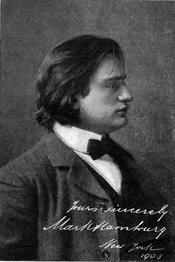
paderewski.jpgPsychology teaches us that music, as such, is a finer sense of the human soul. Music belongs to the most subtle and most sensitive organs of the soul, and as such, it is necessarily controlled by the most subtle and tender activity of the human intellect. We see herein, the strong and evident possibility of certain given nations or races acquiring a certain taste in music under the influence of environment. Thus southern music (Mexican, Hawaiian or Spanish) differs essentially from the music we would expect to hear from the inhabitants of Norway, Sweden or Germany. Thus also, those of us who have a rather comprehensive knowledge of music at least in theory, can very easily distinguish between a French court ballet and a maxixe, between our own Sousa and Richard Wagner, between Drumheller's Love and Devotion and Schubert's Serenade.
 
Sweet Melancholy
Furthermore, generally speaking, music expresses, more than does literature, the soul of a nation. A typical case of this truth is the music of Poland. Polish music expresses the soul of Poland more than the deep, mystical and inspiring words of Adam Mickiewicz, the famous Polish author. In Polish music each little folksong, each musical theme from the single old- fashioned country dance to the exquisite Valse Brilliante of Chopin, seems to breathe a different spirit. They all seem to suggest a different mood for the soulful listener. In Polish music, to speak in plain terminology, when we hear one melody, we love it, when we hear another, we love that too, when we hear another, we love it also, and so on, until—until our brains seem to be awhirl with that certain, unexplainable feeling of—pleasurable pain. Pleasurable pain indeed! Whence it came we know not; we do not even dare to analyze our feeling of sweet melancholy, lest it should leave us for a moment or so.
 
But a realistic world of pleasure do we find in this—pleasurable pain! On hearing a typical Polish melody, I recall that I smiled even through oncoming tears.
 
Could I say more about this unexplainable feeling? Could I say more about the effects of hearing Polish music? Oh, yes, I feel as though I could write and write,— but what? There is much, very much to write, but the human intellect seems to call my thoughts back and say: so far and no farther. The task of delving deeply and successfully into the quintessence of Polish music is as hopeless as an endeavor to translate literally the Italian term "dolce far niente," the German "Gemütlichkeit," or the Polish word "zal."
 
The Countess d'Agoult asked Chopin, "by what substantive he called that which he enclosed in his compositions like unknown ashes in superb urns of most exquisitely chiselled alabaster ?"
 
"Conquered," writes the flowery Liszt, "by the appealing tears which moistened the beautiful eyes with a candor rare indeed in the artist, so susceptible upon all that related to the secrets of the sacred relics buried in the gorgous (sic) shrines of his music, he replied: that her heart had not deceived her in the gloom which she felt stealing upon her, for whatever might have been the transitory pleasures, he had never been free from a feeling which might also be said to form the very soil of his heart, and for which he could find no appropriate expression except in his own language, no other possessing a term equivalent to the Polish word ZAL, As if his ears thirsted for the sound of this word which expressed the whole range of emotions produced by intense regrets through all the shades of feeling from hatred to repentance, he repeated it again and again."
 
ZAL, then, was the principal motif of Chopin's charming music. And, it has been the principal motif of all Polish music from its very birth, especially from Nicholas Gomolka (1539) down to the last echo of Ignace Jan Paderewski.
 
Zal.
Polish music! "Strange substantive, embracing a strange diversity and a strange philosophy! Susceptible of different regimens, it includes all the tenderness, all the humility of regret borne with resignation and without a murmur, while bowing before the fiat of necesity (sic) and the inscrutable decrees of Providence."
 
Strange music of Poland!
What has caused this strangeness?
What strange hands have molded this wonderful spirit of "a strange philosophy?"
 
History and nature have been the strange hands that molded this wonderful spirit of "a strange philosophy." History and nature have been the parents of the Slav temperament, of his deep though simple and tense soul.
 
If we were to ask History, we would readily and undoubtedly discover that music, the finest and most exquisite of the arts, is very often the "bitter" sweetness distilled from suffering and privation. The most subtle development has always come from peoples that have suffered—from peoples that have been ruthlessly oppressed until they have lost their independence and national existence. We also know that happiness and content of life are desirable, but they seldom if ever breed artists or keen and exquisite temperaments of any kind. What Poland suffered, the world knows only too well.
 
"Probably no country in all history has been more torn and crushed in the political grinding together of powerful and warring neighbors than Poland," says Leopold Stokowski in The Etude of February, 1915. Poland has been for centuries the bulwark, the outer fortress of Christianity, and as a celebrated American once remarked, "The vanguard of Democracy!" For years, nay even centuries, numerous enemy hordes of Tartars, millions of wild and maddened beasts came with a great fury and fiery onslaught than would seem possible to exist in human breasts. . . . They came, they pitched their white tents before the grim walls of Kamienietz; they attacked, but the wild tide of barbarians broke in twain on the Christian breast of fair, brave Poland. Kamienietz, Varna, Zbaraz, Somo Sierra. . . . Vienna! What brave and inspiring memories cluster around the crumbling walls of ungrateful Vienna!
 
Henryk Sienkiewicz, the modern interpreter of the soul of Poland, tells us that the Poles never felt safe and secure before the Tartar and the Turk. "In the spring the hordes will come," was a well-known word among them. The Tartar and the Turk did come, like a hungry and revengeful tide and overran poor Poland, but they could not hold what they gained. And Poland fought not for herself. She fought and even died to save the prospering West with its Christianity. Grunwald, Tannenberg will remain, forever in the minds of the civilized world like eternal monuments of life and effort sacrificed for Democracy. The autocratic and militaristic order of Teutonic Knights met the poorly equipped forces of Poland and Lithuania and suffered a defeat that robbed them of their powerful and usurping influence forever.
 
Time Old Enemies of Tartar and Turk
How impressionistic is the Polish soul is seen in their architecture and dress. The Tartar and Turk came, and brought with them all the mysticism and utter fatalism of the Orient. Soon the Turkish tide ebbed away, but the marks of the Orient remained seemingly forever! Even the most casual observation will note the Oriental effects on the European Poles. We see the Turkish impress on their architecture and dress. Passing through some of the down-town streets, we find many a beautiful minaret, arabesque tracery and Byzantine effect in church decoration. Moreover, very many of Poland's deepest thinkers fell victims to the mysticism and symbolism of the Orient. Two of the greatest Polish poets, Juliusz Slowacki and Adam Mickiewicz, very often sing like mystic bards of Teheran.
 
Thus, centuries of almost continuous fighting passed, and finally, Poland, bleeding from a fatal wound, fell. "The partition of Poland," says Alison in his History of the French Revolution, "combines at once all that we hate and despise. It had all the meanness of political swindling, the fury of national rapine and all the atrocity of military massacre." Persecution followed upon persecution until the face of downtrodden Poland was covered with blood. Twice the indomitable Poles arose in revolt, and twice their noble attempts failed! To the readers of history Poland presents a bitter spectacle, a sorrowful and pitiable tragedy of base injustice that cried to God for vengeance. The last scenes of the history of Poland are an epic of shattered hopes, but of pure and bold ideals.
 
Art, and particularly music, nurtured in the breasts suffering all this, could not possibly have been different.
 
Nature, as it is visible in the Slavonic lands, and hence in Poland, also is generally monotonous. Rigor, gradually melting into the spirit of Oriental ease mixed with an air of melancholy, is the atmosphere it suggests. The vast undulating plains, like endless rocking seas of green fields, divided here and there by clumps of solitary elms, involuntarily make one sad. The eye seems to glide over the land in one second, drowning itself unexpectedly in the mists of the horizon. Very few landmarks arrest the eye. There are few, very few hills, but these are beautiful. Beauty—sleeping beauty, seems to be the indelible impression we acquire of the surroundings as they stretch out before us. Over all this resting pulchritude there seems to hover a spirit of mystery, unrest, a spirit of unexplainable sadness, loneliness and sweetest melancholy.
 
The shepherds have led their flocks to the stables. Their flutes are silent for the night. All is silence— the deep, dreamy silence of a summer evening. Surely no music is heard; still one's soul seems to be overflowing with soft and tender barcaroles whose voices, echoing deep in its darkened chambers, seem to lift us to the heights of happiness. Alas, when we are about to dream of this new happiness, we seem to hear a mysterious whisper within us: "Thou shouldst desire more than this happiness. . . . Dost thou forget that happiness is not the sole goal of thy frail life? . , . 'Vanity of vanities; all is vanity.'" We despair! Though we are cheerful, still one thought assumes control over our thoughts. It is the longing, the fond longing for something that would be real in perpetual unchanging value.
 
The beauty of Poland is monotonous, but beautifully monotonous. It breathes sweetness, delight, cheer, content, all crowned with this mysterious and unintelligible spirit of melancholy, this untranslatable—ZAL! "Beauty in its highest forms," says Edgar Allan Poe, "invariably moves the sensitive soul to tears." The indomitable and sensitive Pole responds to this framing of all his art, but particularly his music, to the heights and depths of divine despair.
 
The Baptism of Fire
Thus Poland, baptized in fire and surrounded with the sweet melancholy of Nature, gave birth to a music of "a strange philosophy." She gave birth to a music that is simple and grand. Polish music is famous for its world-wide dances like the Polonaise, Oberek, Kuiaviak, Polka,, Krakoviak, Mazurka and others. Polish music soars high when we consider its originality and exclusiveness. There were, and there are many musical geniuses of other nations that exerted their otherwise pregnant and inventive minds to compose a Polonaise, a Kuiaviak or a Polka, but their honest and good- hearted endeavors were not blessed, with the real, distinctive Polka, but merely a composition which they themselves designated as Tempo di Polacca.
 
In the valuable Etude of February, 1915, we read the following in the editorial: "Those who feel and know that the tragedy of Poland is in its last scene, and that the new Poland is to spring from the ashes of what the daring author, Michael Monaghan, has called 'the last war of the kings,' must realize that Poland has gained its greatest renown during the latter part of the nineteenth century through its wonderfully capable and inventive musicians. While there have been great Poles in large numbers of the other branches of Polish accomplishments—among them the giant, Henryk Sienkiewicz—the world at large has not failed to note that music is the art in which the genius of Poland has received its greatest recognition. Who can estimate music's debt to the land of Chopin and Paderewski?"
 
The tragedy of Poland, the Old Poland is ending. Poland, the New Poland is free and will be powerful once more. Nature will remain in its original suggestiveness and beauty and sweet melancholy, but the historical conditions will eventually be changed.
 
What music may we then expect from resurrected Poland?
Paderewski is announced to begin an American tour in November.
 
Mascagni conducted the performance of his much discussed opera, "II Piccolo Marat," at the opening of the season in Buenos Aires, early in June.
 
A Schumann Festival, the first ever to be held in his birthplace, has recently been managed successfully in Zwickau, Saxony, where Schumann's father kept a bookstore and where Robert spent the first eighteen years of his life.
 
The 500th Performance of "Samson et Delila" at the Paris Opera-Comique was recently given, according to report, in memory of Saint-Saëns.
 
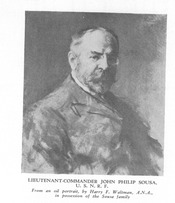
Sousa, it is said, will return to his home, from the autumn tour of his band, and after November 5 will devote his time to the writing of an opera on a strictly American subject, in which Mary Garden is to appear in the principal role.
 
Summer Opera, at the Cincinnati Zoological Gardens is meeting with marked success this season. A notable feature is that Ralph Lyford, the conductor, is an American and fourteen of the singers of the company are Cincinnati trained.
 
Portraits of Famous Composers appear on the new series of stamps issued by the Austrian government.
 
Gabriel Faure was officially recognized as the Dean of French Composers, by an elaborate performance of a programme of his works at the Grand Amphitheatre of the Sorbonne, Paris, at which President Millerand and the ministers of state attended.
 
The Prize Winning Opera. "The Prince and Nuredha" by Guido Bianchini, a soldier musician, chosen from among thirty submitted to the committee appointed by the Minister of Pine Arts, will be presented this autumn at the Teatro Fenice of Venice.
 
The Philharmonic Society of Berlin recently celebrated the fortieth anniversary of its organization by a series of three notable concerts.
 
Fifteen Thousand Dollars has been bequeathed to the Cincinnati Symphony Orchestra Association, by the late Mrs. Susan W. Longworth, mother of Representative Nicholas Longworth.
 
The Partello Collection, probably the greatest collection of master-made violins of the world, has been sold to a Chicago music house at a price said to be $150,000. It consists of twenty-four violins and twenty-eight bows by the most famous of all makers.
 
The Prix de Rome will not be awarded this year as no composition submitted to the Academic des Beaux Arts was considered worthy of the Grand Prize.
 
Sir Frederick Bridge, so long organist of Westminster Abbey and England's greatest musical antiquarian, was honored the first week in July, by a valedictory service at Albert Hall in recognition of his relinquishing the baton of the Royal Choral Society, which he has held for twenty-six years. The Duke of Connaught, president, and the Earl of Shaftsbury made addresses.
 
Eugene Ysaye, having laid down the baton of the Cincinnati Symphony Orchestra, will re-enter the concert field and begin a tour of America in January, 1923.
 
Mme. Schumann-Heink received on her birthday, June 1A the degree of Doctor of Music, from the University of Southern California.
 
A Mozart Festival will be held from August 13 to 29, at Salzburg, his birthplace. Richard Strauss will be the chief conductor; while Selma Kurz and Eugen d'Albert will be the soloists best known to Americans. "Cosi Fan Tutti," "Marriage of Figaro and "Abduction from the Seraglio" are the operas to be given with orchestral concerts interspersed.
 
A $1,000 Prize is offered by the North Shore Festival Association for a composition for Orchestra. Particulars from Carl D. Kinsey, 624 South Michigan Ave., Chicago.
 
Beniamino Gigli, a leading Italian tenor of the Metropolitan Opera Company of New York, has had the ribbon of Commander of the Crown conferred upon him by King Vittorio Emmanuelo, for his work in the diffusion and affirmation of Italian art, particularly in the United States.
 
A Service of the Music of John Blow was recently held in Westminster Abbey. Blow was Organist of the Abbey in 1669; and this was the first of a series of services in commemoration of great musicians who have been connected with the Abbey.
 
Theodore Dubois has been awarded the Jean Reynaud Prize of 10,000 francs for his work as a composer and the influence he has had on music and the younger generation of composers.
 
Newton J. Corey passed away on the morning of July 18, which will leave a sense of loss in the lives of the hosts of people who have been helped by his inspiring activities in the musical world. He was secretary and manager of the Detroit Orchestral Association, and well known as an organist, lecturer and writer on musical subjects. For years he had been Editor of the Teachers' Round Table Department of The Etude; and his death comes keenly not only to his fellow-workers on the staff but also to the multitude of readers who have learned to rely on his wise counsel. Also he had been editor of Arts and Artists and music critic of the Detroit Saturday Night for which he wrote trenchantly and fluently. Mr. Corey was born in Hillsdale, Mich., on Jan. 31, 1861. At thirteen he was organist of the church of Hillsdale College, where he was educated. In 1880 he went to Boston where he devoted himself largely to the organ. In 1891 be settled in Detroit as organist of the Fort Street Presbyterian Church which position he has held since that time. In 1910 Mr. Corey received the degree of Doctor of Music from Hillsdale College.
 
Miss Elisabeth Cueney of St. Louis has been elected president of the National Concert Managers' Association.
 
Mr. Herbert Bedford's lectures on Unaccompanied Song are said to have been one of the hits of the London Season.
 
Chaliapin, the eminent Russian basso, has announced his intention of bringing his family to our shores and becoming himself an American citizen.
 
The Department of Music of the University of Minnesota has received an appropriation of three hundred thousand dollars from the State Legislature, for expenses including buildings and equipment,
 
The National Federation of Music Clubs is offering prizes for a Lyric-Dance- Drama—$400 to the Librettist and $600, to the composer of the music. The Judges of the Libretto have announced Robert Francis Allen to have won the former with his book, "Pan in America." Copies of this will soon be ready for distribution by the Chairman of American Composers, Mrs. Edwin B. Garrigues, 201 Bellevue-Stratford, Philadelphia, Pa.
 
An American Museum of Musical Art has received a charter of incorporation and will be eestablished (sic) in Brooklyn, for the purpose of preserving objects of interest in the development of music as well as to increase and diffuse knowledge of its history, science, influence and utility.
 
Philadelphia has appropriated $40,000 for free orchestral concerts in Fairmount Park, to be performed by fifty members of the Philadelphia Symphony Orchestra under well known guest conductors. Standing room within hearing distance of the amphitheatre on Lemon Hill has been at a premium.
 
Prince Albert of Monaco, one of Europe's most liberal patrons of music, died June 26, in a Paris hospital. He will be remembered gratefully by many an American soldier for having placed his estate at the service of General Pershing as a recreation ground during the last days of the war.
 
Alexander Glazounoff, premier Russian composer and conductor, is scheduled for a tour of America next season, at which time he will appear as guest conductor of our leading orchestras.
 
Handel's "Orlando Furioso" has been revived at a Handel Festival recently held at his birthplace, Halle. This is said to have been the first performance of this opera since the composer's death.
 
THE NATIONAL, AMERICAN MUSIC FESTIVAL offers $3,800 in contest prizes at the 1922 festival to be held at Buffalo, N. Y., October 2 to 7. For particulars write A. A. Van deMark, American Music Festival, 223 Delaware Avenue, Buffalo, N. Y.
 
Richard Hageman has been engaged as associate musical director and first conductor of the French repertoire of the Chicago Opera.
 
Wallingford Riegger has been awarded the Paderewski Prize of five hundred dollars, for his Trio in B Minor for Piano, Violin and Cello. An interesting feature of the award is that, though Mr. Riegger (American born of American parents and mostly American educated) has conducted the Bluthner Orchestra of Berlin, has been assistant conductor at the Royal opera of Wurtzburg, first conductor at the Louise Theatre of Konigsburg and is now professor of harmony, counterpoint and composition at Drake University of Des Moines, Iowa, he has won this prize though never having had a composition published.
 
Mischa Elman has returned from his world tour of two years which was particularly notable for his enthusiastic reception in the Orient.
 
Tannhauser has just been given by the Imperial Music School in Tokio with an all Japanese cast. Why not? Once we attended a performance of Madama Butterfly with an American Soprano, an Irish tenor, An Italian baritone, a German contralto and a Scotch Bass. Surely the Japs were consistent in making Tannhauser all Japanese—at best grand opera plots rupture the strongest imaginations. Gatti-Casazza, who has directed the Metropolitan since 1908, has just signed a new contract for three more years. We understand that during his directorship the opera has been run without a deficit.
 
Britain is honoring its musicians by unveiling a tablet in St. Paul's Church, Covent Garden, to the memory of Thomas Augustine Arne, born in 1710. Also the Trinity College of Music, in order to celebrate its jubilee this year, is subscribing for two windows to adorn its building, one to Purcell and the other to John of Forncett, these central figures to be surrounded by small portraits of the most influential musicians of each century. Thomas Arne has been singled out as the most influential secular composer in England in the eighteenth century, and so a further memorial will stand in his honor.
 
Sasche Guitry, the inimitable actor-author, comedian of Paris, has just completed the book of a comic opera for which Ivan Caryll (pen name for the Belgian composer Felix Tilkins) has just written the music.
 
A New Choral Symphony in seven movements, entitled Vita Nuova and said to have been inspired by Dante, has just come from the pen of Jenö Hubay. It was produced in Budapest with great success.
 
An English physician named Heath (according to Le Menestrel) has discovered that music is an aid to digestion and has prescribed special music for special parts of the menu. He recommends "love songs" during the roast.
 
The New Memorial Centre of Music, for which New York proposes to spend $30,000,000, will probably be located on two blocks on 59th St. facing Central Park. In all probability the building will become the home of the Metropolitan Opera Company as well as other great musical undertakings.
 
A Fifteen Year Old Soprano, Marion Talley, sang the title role, of "Mignon" at the annual performance of the Kansas City Opera Company this year. Her debut was a pronounced success.
 
Stravinsky has recently completed a comic opera entitled "Mavra." It is said to have been done in his most advanced style but to be exceedingly humorous in treatment.
 
The Beggars Opera, which it is expected will be heard in the country next year, has been running in London for two years. It is nearly one hundred and ninety-six years since this remarkable pasticchio was first given at the Lincoln's Inn Fields Theatre. The success of the present revival is said to have been due to a remarkably gifted and experienced conductor, Frederick Austin, who is also a composer and a singer. Possessed of that inimitable British skill in stage presentation which made the Savoy and the Gaiety companies models of finish and smoothness, the two-century-old bit of satire and musical patch work has been resuscitated in a manner which has "packed the house."
zenith.jpg
A Historic Conference Conducted Through the Co-operation of a Group of the Foremost Pianists of the Day in the Interests of ETUDE Readers
 
HAROLD BAUER OSSIP GABRILOWITSCH RUDOLPH GANZ
PERCY GRAINGER JOSEF HOFMANN ERNEST HUTCHESON
ALBERTO JONÁS ALEXANDER LAMBERT SIGISMUND STOJOWSKI
 
In march (sic), 1918, The Etude invited a group of very distinguished pianists (several of whom, during the past few years, have given a part of their time at least, to the practical problems of teaching the art of piano playing), to a private dinner held at Claridge's Hotel, in New York City. One or two were good enough, though prevented by absence from the city from accepting the invitation, to send in their opinions upon the above subject after the dinner.
 
The artists participating represent many of the most brilliant, experienced and active minds in the field of sincere pianistic study. The Etude is especially proud of the outcome of the conference for it is not overstating the facts to say that it is of historical significance. An expert stenographer was present and took copious notes, from which the following was prepared.
 
It is impossible to present all the views given in this one issue, and the discussion will be continued in other issues—other artists not included in this issue being included in later issues.
 
The Etude desires to call the attention of its readers to the wide experience represented in this discussion. The artists have been trained in different schools by teachers of many different inclinations. All the best traditions from all of the different art centers of this country and Europe are represented. The discussion followed the plan of considering the piano and its art: (a) from the standpoint of the instrument itself; (b) from the standpoint of the interpreter; (c) from the standpoint of the composer for piano.
 
The evening opened with a slight digression from the subject, dealing with the very fortunate opportunity that music and musicians have had, to serve in the great war. Many of the artists had taken an active part in playing at concerts given in the camps and for war benefits.


EDITOR OF THE ETUDE
The present seems a very fortunate time in which to conduct such a conference as this, since never before in the history of the world has the need for music been more apparent to thinking men. The Etude has secured a series of articles and statements from illustrious men and women, including General Pershing, General Hugh Scott, Lyman Abbott, Henry C. Van Dyke, Samuel Gompers, John Philip Sousa, Ida M. Tarbell, Dr. Anna Shaw, Thomas Edison and others, emphasizing the special need for music in war time. It is most important that the interest in our art be actively maintained by its leading workers at this time.
 
MR. ALEXANDER LAMBERT
There was a letter in the New York Times yesterday that was very interesting. It outlined the pressing need for music of the right kind during the war. It is very inspiring to see the manner in which our leading musicians have been only too anxious here and in Europe to give their services. The fighters need the relaxation of music, and those at home likewise. On the whole, the art will receive an altogether unexpected impetus, due to war conditions, since the public has been presented with an opportunity to realize the serious need for music in times of great crisis. Those who, heretofore, may have thought music inconsequential, or unnecessary, will have their eyes opened.
 
MR. ERNEST HUTCHESON
As far as I have read, the military and naval, authorities have done everything in their power to encourage the employment of music wherever groups of soldiers are gathered together. The soldiers here and abroad appear only too eager to grasp everything in the way of musical inspiration and encouragement. Here in New York, at the Columbia University Hospital for Wounded Soldiers, they have been trying, among other things, the use of music as a therapeutic agency—particularly in cases of shell shock. Musicians should take time by the forelock and consider conservatively the possibilities of their art in helping such cases. One loses one's sense of proportion in the midst of such vast war preparations. I am comforted when I think that any war, however disastrous, is but an incident in the history of the world, and that art, including the beautiful art to which we are devoting our lives, is something ultimately of far greater importance and permanence. Think of the wars that have come and gone while the masterpieces of Purcell, Bach, Handel, Mozart, Beethoven, Chopin, and other composers live in triumph. Music, the most ethereal of the arts, is also one of the most enduring. Wars carry away cathedrals, libraries, great paintings, but music always survives.
 
RUDOLPR (sic) GANZ
While this is not yet the main subject of our discussion, I am very much impressed with our interesting overture. The war has, indeed, brought out new phases in music. A few weeks ago, at one of the soldiers' camps where I played, the audience was remarkable in every way. They wanted "encores," and demanded only the best there is in piano literature. Compare the new American Army with the army of other days. Here are men of all walks in life. Some with as highly cultivated taste as one would encounter in a Carnegie Hall audience. It seemed a little surprising when, at another camp, I asked for requests, to have some of the men call for the Symphonic Etudes of Schumann. To me, the musical achievements in many of the camps is nothing short of amazing. I am sure that the life in most camps has been made infinitely better for the men owing to the musical and other entertainments and opportunities to sing.
 
SIGISMUND STOJOWSKI
The interest of all manner of artists in America and Europe in supporting humanity's great battle in every possible way will not be forgotten. As a Pole, I am proud to point to the tireless labors of my great fellow-citizen, Ignace Jan Paderewski, whose personal sacrifices at this time are already historic, That musicians have been able to play such a significant role in the greatest hour in the history of the world, is significant of the world's progress. While music has been promoted from a mere object of amusement or luxury to a factor in education, character, civilization— the musical artist himself, the "servant" of Ioccenes of yore, the "amuser" of crowds in later days, is at last understood to be a full-fledged "man" with a wide range of interests and knowledge, a heart vibrant with human sympathy and generosity—a "man" truly qualified to "lead" because of his high intellectual achievements and purposes.
 
EDITOR OF THE ETUDE
The discussion of the subject of our conference has commenced a little in advance. Here is a letter from Mr. Percy Grainger, who expected to be here to-night, but is unable to do so, owing to his service in the army. Before reading his letter it may be interesting to consider some of the possibilities of our subject, "Has the Art of the Piano reached its zenith or is it capable of further development?" The development of the piano as an instrument has been amazingly slow in many ways. Yet it has been a development. It is an instrument which, in comparison with the violin, is comparatively new. The famous Brescia violin maker, Gasparo da Salo (Bertalotti) died in 1609; the Maggini's, respectively, in 1640 and 1680; the Cremona family, of Amati, passed on, respectively, in 1611, 1638 and 1684; the three Stradivari in 1737, 1743, 1742, and the Guarneri family, respectively, in 1695, 1730, 1745. The work of the great Italian violin makers is more sought in this day than ever. None of the violins of present-day makers are conceded to be their superior and the zenith of the manufacture of the instruments was evidently reached nearly two hundred years ago. This fact is so well established that there is no gainsaying it. On the other hand, what of the piano? Hundreds of years passed from the time of the invention of the monochord before the first keyed string instruments were in use, and then more hundreds of years before the advent of the first piano of Bartolomeo Cristofori, which probably appeared first about 1709 or a little earlier. The two instruments of Cristofori, which have been preserved (one of which is in the Metropolitan Museum of Art in this city) are so radically different in many ways from the modern grand pianoforte that it is difficult to think of the bridge between them.
 
Since the invention and the improvement of an instrument often marks a change in the progress of the art of the instrument it is perhaps wise for us to consider the possibilities of the instrument at the start. We all know, for instance, how the invention of the saxaphone and other instruments of Adolphe Saxe have affected some phases of modern instrumentation. Is it not within the scope of this discussion to ask whether the piano may not advance in future years along different lines which will affect the art of the instrument, or has the instrument attained a form which is not likely to be changed to its advantage in years to come. Mr. Grainger, as I have said, has already sent in a few lines. He seems to have devoted a great deal of thought to radical changes in the instrument in the future, and for that reason it may be best to read his communication here. We are all familiar with the many new sound effects which he has introduced in his orchestral works.
 
PERCY GRAINGER
"Has the art of the piano reached its zenith or is it capable of further development?" Whether the piano in its present form has reached its zenith as a solo instrument I cannot tell; I have no feeling one way or the other as regards that aspect, but I should like to point out that it is only at the beginning of its possibilities as an instrument in the symphony orchestra and military band and as a unit in large chamber music combinations and only at the outset of its truly marvelous possibilities as a mechanically played instrument. But I do not consider the present form of the piano as FINAL. I have in my mind a sketch for a piano equipped with several manuals, each "manual operating hammers of different weights and degrees of softness and harshness. Such an instrument, if further provided with octave coupler stops like an organ and with electrically operating tremolo action like a piano similarly equipped that I heard in London some years ago would be a marvelous solo instrument (combining all the variety of the forerunners of the pianoforte, harpsichords, etc., with the glorious richness and volume of a modern grand pianoforte of the highest type) as well as a gold mine for symphony orchestra, small orchestra, military band and chamber music work.
 
The mechanically played possibilities of such an added-to piano would be just immense.
 
Then, there is another aspect of the piano and its keyboard. Percussion instruments, bells, marimbas, tubes, etc., will play an ever increasing goal in modern scores, I feel sure. But the full possibilities of these instruments will never be tapped until they are equipped with piano keyboard action, like the celesta. The piano keyboard will then be the "volapuk" or universal medium for some six to ten different percussion instruments which, together, will form a section in the orchestra just as important as are, to-day, the strings or the brass. There is, furthermore, no reason why all these various percussion instruments, each provided with innumerable octave-coupler and manual-coupler stops and the electric tremolo outfit above mentioned, should not be united together in one huge percussion-piano or percussion-organ, and in this leviathan piano, which would be a "complete orchestra in itself," as well as an un-do-withoutable addition to the modern orchestra. Viewed from several standpoints, therefore, I consider the art of the piano as being very far from its zenith.
 
ALEXANDER LAMBERT
One feels like drawing a long breath after hearing of such an instrument as that. Whatever it might be it would not be a piano, but a kind of keyboard operated instrument of a different type. We already have instruments operated from a keyboard, like some of those to be heard in motion picture theaters, as well as electrically vibrated instruments of the choral-celo type, marvelous mechanical intruments (sic) to be sure, but in no sense pianos, they are instruments in a class by themselves, and they fill a special need for which they were built. It is not inconceivable that such an instrument will be combined with a large orchestra as, indeed, they are in some motion picture theaters where there are very large orchestras continually employed, and often with beautiful effect. But this only emphasizes the point that the piano is still the piano, and not anything but the piano. In my opinion the piano has long since found itself, that is, it has a well defined entity by itself, and that any radical change in the instrument will injure the art that has developed around it. While the modern pianos are different in some tonal effects from those of less tonal quantity from those of the days of Mozart, Beethoven and Chopin the character of the instrument is the same. True, the piano, because of its mechanical nature, does not have the endurance of the Cremona violin, but I insist that the best modern grand pianofortes are in spirit the same as the first instruments of Cristofori, that is, they are pianos and nothing but pianos. Since the time of Liszt, when the possibilities of the grand piano, as we know it to-day, were practically the same, I cannot see that there has been any advance except in certain refinements.
 
ALBERTO JONÁS
To me it seems idle to speculate on what the future may bring in the matter of further improvements of our modern pianos. In a series of three articles which I wrote for The Etude several years ago I pointed out that all improvements in musical instruments have originated, not with the manufacturers, but with the composers or with the players of instruments. It is desire which brings about a result. Therefore, it seems to me, that instead of speculating in which manner the piano may be improved we should simply find out what it is that we still wish the piano to possess. Evidently, and foremost, among these desired improvements, is the ability to sustain for any length of time and to increase at will the tone of the piano. Time will show whether this can be accomplished without losing that which forms one of the principal charms of the piano: the purity and the comparative brevity of the tone. Inasmuch as the trend of human progress seems to be more in the direction of science than,—alas! if this should turn out to be true— of art, it is possible that the piano of the future will in truth be a whole orchestra manipulated by one single player.
 
SIGISMUND STOJOWSKI
I find myself in complete agreement with Mr. Lambert. Some fifteen years ago I met a clergyman in Berlin who was going about boasting of a musical invention that he claimed would revolutionize the musical world. It was nothing more or less than a piano to which three trombones had been added. I hardly think that would be an improvement in the piano. To me it seems most important that all those who are in any way connected with the study of the piano should revere their art as an art. First, the piano as an instrument; second, the interpretation of the instrument, and third, the compositions that have been evolved from the instrument and for the instrumen (sic) (like the idiomatic works of Chopin and Debussy) all represent a wonderful and distinct art achievement. Is it possible to expect the art of the piano to go beyond its real sphere already clearly outlined by its significant past?
 
 
This conference will be continued in the next issue of The etude with some remarkable facts. All the pianists mentioned at the head of this article will participate in the conference before its conclusion.


"Cheap Violins"
Why will people buy cheap, worthless violins to "learn on"? It seems to be owing to some queer crook in human nature that people who think nothing of paying $400 or $500, or even more, for a piano, think it is good policy to pay $5 or $10 for a cheap fiddle at the start. Now, it should be understood that these cheap fiddles are practically worthless so far as producing good musical results go. They are in the same category with $1.25 shoes, $8 suits of clothes and eyeglasses which are sold at the five and ten cent stores. They are like wooden razors, only made to sell.
 
The theory on which people buy these cheap violins is that they do not know whether the pupil will make a success of violin playing and do not want the instrument left on their hands if he does not. It is strange that they do not apply the same line of reasoning when purchasing a piano or a vast number of other articles which might be named.
 
Theodore Thomas, the late famous orchestral director, who was an excellent violinist himself, was always most emphatic in advising violin pupils to use violins with a good quality of tone. His theory was that the rough, crude, rasping tones of a cheap, worthless violin were a positive injury to the growing brain and artistic nature of a pupil obliged to use it.
 
Harsh Tones An Injury
How can a pupil enjoy practice on a rough-toned violin, and what inspiration can he hope for from the tones of such an instrument? The surest way to insure the failure of a violin pupil is to give him a violin every tone of which grates on his nerves and sickens him. A human being will not thrive on bad, unappetizing food, and a music pupil will not thrive with practice on an instrument which gives forth harsh, inartistic tones.
 
Beautiful tones are admired by everyone, and if the pupil has an instrument which produces such tones he will enjoy his practice and make a success of his violin work. If he has a poor instrument he will hate the sight of it.
 
Cheap violins are made of crude material, by the cheapest processes. It is impossible that the graduation of the top and back can be properly done. The whole object is to get up a cheap box which can be sold for a small price.
 
Poor Mechanical Details
Aside from the bad tone and being uneven in the higher positions, and with horrible "wolf" tones on the G string, the mechanical details of these cheap fiddles make them an abomination to the player. Instead of ebony trimmings they are usually fitted up with trimmings of some ordinary hard wood, stained black to resemble ebony. As a consequence the pressure of the fingers on the strings wear little gutters in the fingerboard in no time. Pegs of such wood also lack the rigidity of ebony, and twist in the sockets, and often twist in two, making it impossible to tune the violin properly. Then the pegs in such violins do not fit the holes closely, making tuning doubly difficult. It is worth paying a good price for a violin only to have a well-fitting set of genuine ebony pegs, and other ebony trimmings. These cheap violins are slapped up in such a hurry, that the sound-post does not fit, the bass bar is not properly made or adjusted, the bridge is the wrong height, and does not follow the curve of the violin, the nut too low or too high, with the notches for the strings badly spaced. Then, on such instruments, the fingerboard is usually placed at the wrong angle, making it too low or too high, and necessitating the use of a bridge either too low or too high. Many other defects in such instruments could be pointed out. It is often necessary to go to the expense of several dollars to put such a violin in even approximately correct playing condition. It is real economy to buy a violin of fairly good quality at the start.
 
It is hard to change human nature, and, recognizing the reluctance of people to buy violins of good quality until they are sure the pupil will not tire of the violin, and give it up in a short time, some teachers keep a few violins of good quality which they rent to pupils temporarily. It is also often possible to rent violins from violin dealers, and music dealers. Some dealers in old violins have an arrangement whereby they sell a violin, with an agreement that they will refund the money paid for it, less a reasonable commission, if the purchaser desires to return it at any time.
 
The idea of buying a very cheap violin to start with would not be so bad, if a better violin were purchased after a few weeks' trial, wherein it is seen whether the pupil will "take" to violin study. As a rule, however, the better violin is not bought, and the matter drifts on for months or years, before the pupil is provided with a good violin. Meanwhile the young violinist is tortured with the wretched first instrument, which has been bought, through false economy, to see whether he will study the violin permanently.
 
In the pauses of a Haydn or Mozart symphony a word falls lightly from the lip; one is cheerfully exhilarated and happiness makes one communicative. After a Beethoven movement the lip is mute, because we are lifted above the world by his wondrous power of idealization.
 
In gazing upon landscape paintings we experience a similar effect. A smiling valley bathed in blissful fragrance and filled with vari-colored blossoms renders us gay and talkative; amid elevated mountain scenery, where the pathos of solitude, the overwhelming grandeur and silence of nature surround us, we walk silently side by side.—Ehlert, in From the Tone World.
 
A correspondent writes: "The trouble I am confronting at present is the counting of time. I have great difficulty to keep the time regularly on even a short piece from the beginning to the end. I understand that the lack of leisure for practice is one of the chief causes of my difficulty, but as a self-supporting student in the --------- Institute, I cannot afford to spend more than an hour a day. My aim is not to become a professional player, but to learn enough to amuse myself, if not my friends, although I am an ardent lover of the violin. I should like to hear if there is any way to cure my difficulty, i. e., the irregular counting of time while playing."
 
Our correspondent's case is typical of that of thousands of violin students who are trying to learn the violin, either with incompetent instruction, or no instruction at all. Some students have a natural talent for playing in time, and learn it with hardly an effort, others only learn it after long continued study with a good teacher; others never do succeed in learning it, either from lack of talent, or because they do not give enough study to it, or do not have competent instruction.
 
The violin being a melody instrument, it is much more difficult for a violin student to learn to play in time than a student on the piano or organ, where, in so many passages, the accompaniment keeps the time of the melody straight, the left hand as it were counting for the right.
 
The first thing our correspondent should do is to master the theoretical part of playing in time, that is the number of beats and fraction of beats given to the various kinds of notes and rests, and the number of beats in a measure in the different kinds of time, 2/4, 3/4, 4/4, 6/8, 9/8, 4/2, etc. The theoretical part of time keeping is not difficult to master, and almost any instruction book has tables giving the time values of notes, rests, etc., or an elementary book on theory can be obtained.
 
It is in the practical application of these principles that the difficulty lies. The student may beat or count while he plays, at all times, and yet play atrociously out of time, for the simple reason that he beats or counts wrong, that is, unevenly, irregularly, hurrying up one measure and retarding another. Some students who cannot play in time, invariably slow up on the hard passages, and hurry up the easy ones.
 
The violin student has the choice of two methods in keeping time, one beating with the foot, and the other counting audibly or inaudibly. If the time is kept by beating with the foot, it should be very softly, since loud stamping with the foot is very amateurish, and annoying to the listener. Although many teachers frown on this foot beating, there seems to be many pupils who do not seem to be able to keep time any other way. I have often noticed musicians of worldwide fame, even concert violinists and orchestral conductors at concert performances beating with the foot, and in public at that. If this method is employed, it is a good idea to mark in the music the notes or rests in the measure on which the beats fall. This can be done with a lead pencil very lightly so that the marks can be readily erased by the teacher if wrong.
 
Metronome a Help
It is very difficult for a violin student to learn to keep time regularly and evenly without a teacher to point out his mistakes. To such a student a metronome is a great help, although too much practice with a metronome is apt to result in a mechanical style of performance. In using the metronome at the start, very easy music, consisting principally of whole, half and quarter notes should be used. The metronome should be set at a very slow tempo so that the student can hear that the notes coincide with the beats of the metronome. When the student has acquired sufficient proficiency to play these easy exercises or pieces with the metronome, more difficult music, containing dotted notes, eighths, quarters, sixteenths, triplets, and the various rests, etc., can be taken up.
 
Another great help for the self-taught violinist is practice with others. Many Sunday and day schools have orchestras which the student might join. The music used is usually of an easy grade, and the student will find that the fact that he must play in time with the others, or lose his place in the music, will assist him greatly in gradually learning to play to conform to a steady beat. Playing with piano accompaniment, or in violin duets, trios, quartets, etc., is also an excellent help in learning to play in time. The self-taught pupil may imagine that he is playing a part in perfect time, but when he comes to play it with another, he finds that the two parts do not fit, owing to one of the performers playing in incorrect time. Mistakes in time which he never dreamed of will come to light when he plays with others. A violinist practicing alone like a hermit, cannot expect to learn to play in perfect time. A certain amount of practice with others is essential.
 
Advantage of Using Easy Music
Students trying to learn to play in time often fail because they use comparatively difficult pieces and exercises for the purpose. The first exercises should be very simple, first whole notes, then half, then quarter, then exercises containing all three combined with rests, and progressively eighths, sixteenths, thirty-seconds, triplets, etc., etc., with the corresponding rests.
 
With many violin students the art of playing in good time is a matter of years. Not only must the student learn to keep strict time, but to gradually accelerate and ritard the movement at will at any given degree necessary for an artistic rendition of the composition. We have poco rit., a slight ritard; molto rit., a great ritard, and constantly changing degrees of tempo. Much experience and long study is necessary to master the science of keeping time.
 
The Italian words at the beginning of a composition indicate the speed of the beating. For instance, andante means slowly, allegretto, rather fast, presto, extremely fast, etc., all such terms should be known to the pupil. Many beginners in music have the idea that a certain note is always of the same duration in any composition, and it seems hard for them to understand, for instance, that in a very
slow movement an eighth note may be longer than a quarter note in very quick time.
 
Summing up the matter of learning to play in time, it is possible for a pupil of great talent and ingenuity, to learn to play in time if he have opportunities of hearing much music, and of playing with others, but without such talent, it is doubtful if it can be done. Pupils with poor talent often fail to learn time even with the assistance of a good teacher over a long period of years.
From an Interview by E. Hughes
II.
 
 
Knowing that Leschetizky had studied all the Beethoven concertos and most of the sonatas during the time when he was a pupil of Czerny, and that Czerny had gotten the traditions from the master himself, I asked for a few words on the interpretation of Beethoven.
 
"One must play Beethoven with feeling, with warmth. Beethoven himself hated this so-called 'classical' piano-playing which so many pianists affect. That he was no pedant is shown by the fact that he wrote more expression signs in his compositions than any one else has ever done—and changed them more often!
 
"These things I had from his own pupil, Czerny. There was once a critic in Berlin who heard what was to him a new cadenza to one of the Beethoven concertos. In his critique of the concert he took especial pains to load the cadenza with all sorts of abuse, declaring it absolutely unsuited to the style of the concerto. The next day he discovered that the cadenza was by Beethoven himself!"
 
In conclusion, I asked Leschetizky to say something about the interpretation of his own compositions. He regrets that some which he considers among the most interesting are little known, or at least rarely played, such as the "Menuetto Capriccioso," with its charming contrapuntal workmanship, and the "Fantaisie Nocturne," a mood picture full of fine feeling.
 
"The group of pieces entitled 'A la Campagne' should be played together. It is, in fact, a suite, of which the first number, 'Wellen und Wogen,' forms the prelude; the 'Consolation,' the andante; 'Primula Veric,' the intermezzo; the 'Mélodie à la Mazourka,' the scherzo, and the 'Danse à la Russe,' the rondo-finale.
 
"The six numbers in opus 39 are souvenirs of an Italian journey. The 'Barcarolle' (Venice) is in reality a ballade. With the arabesques of the introduction one must create the atmosphere of the lagoons. The first theme (Moderato) paints the forsaken lover as he sits alone in his gondola under the shelter of a vine-grown bank of the canal, awaiting the passing of the bridal procession of his former beloved.
 
"An especial tenderness is produced in this part by breaking the voices in the right hand often. The train of gaily decorated gondolas is now heard faintly in the distance. The thirds picture the light splash of the oars and must not be played 'bravoura.' With the aid of a supple wrist they may be brought out with the required gracefulness. The procession passes on its way to the church, and then comes a short recitative.
 
"The lover meditates on his fate, but immediately the bells in the 'campanella' break in upon his meditation, and, overpowered by thoughts of the happiness which has been torn from him and given to another, he casts himself with a wild plunge into the somber waters, which gurgle and bubble over his disappearing body. Quiet has come again. The bells have ceased and the procession wends its way stately back from the church. The new bridegroom sings a love song to a soft accompaniment and slowly the cortège disappears in the distance."
 
In connection with the "Tarantella" from opus 39 Leschetizky told me the following story:
 
"When I was in Naples I wanted, of course, to see a tarantella danced. You know there are troupes of dancers who will perform before you if they are properly paid; but these paid dancers left me unsatisfied; it seemed as though the real spirit were not there. Shortly afterward I went over to the island of Capri and happened quite by chance on a band of peasants who were dancing a genuine tarantella for all they were worth! I could watch them from a little distance without disturbing them in their amusement.
 
Suddenly there appeared on the scene a funeral cortege from the village church near by—you remember there comes a lull in the movement of the piece. Headed by the priest with his little bell, the sad procession made its way slowly through the midst of the dancers, who, of course, ceased their motions, knelt on the ground and piously crossed themselves. But scarcely had the last mourner passed than they were on their feet again, whirling around more furiously than ever! I had seen a real tarantella at last!
 
"The 'Arabesque' in A flat, opus 45, has been played often in America by Madame Zeisler. The melody notes in the upper voice are to be brought out distinctly, and the whole played with an easy fluency. Safety in striking the right notes in the skips is insured by 'preparing' them, i.e., placing the fingers quickly and silently on the notes before they are played.
 
"The 'Serenade,' opus 43, is in imitation of the lute. Imagine a gay young troubadour swaggering into a court full of brilliantly gowned ladies. He whangs his many-stringed instrument and sings his almost impudent lay with an air of utter indifference to the beauty around him, while the ladies gaze on his attractive person with whispered expressions of surprise at such behavior.
 
" 'La Piccola' is an excellent study for the first and second fingers, but one must not play it as an etude, for it is very grateful when the melody is carefully shaded and properly brought out."
 
Leschetizky's publishers make him most flattering overtures for new compositions, but his time is so occupied with teaching that little remains for creative work. A new concerto is now in the course of evolution, and several smaller pieces were completed last season.
 
"I have already one concerto entirely finished; but when the work was done it did not satisfy me— it was not real 'Leschetizky.' So I sealed it up very carefully and had it carried up to the garret—with especial directions that it be destroyed after my decease!"
 
This is a good example of the sort of criticism which the master employs over his own work. And it is the same at the lessons as with his composition—always the same painstaking care that has brought forth such brilliant results in the world of pianoforte-playing.
 
(Part 1 of this interesting interview was printed in the April Issue.)


The Making Of An Artist.
 
ossip-gabrilowitsch.jpgLike a number of other noted pianists, Ossip Gabrilowitsch could have recourse to another profession if the necessity should arise. Educated in the law, much of his spare time in Russia is spent in the courts, where his father is recognized as an eminent criminal practitioner. Another phase of his mental equipment is the mastery of languages.
 
Here, again, it is curious to note that, of the soloists coming to us, the pianists have, so far as knowledge of English goes, distinctly the advantage. On the other hand, vocalists, who come to us year after year, are completely ignorant of English. This fact is all the more remarkable in that they leave, at the end of the American season, to sing in London, spending but a few weeks in their respective countries, whose language, beyond a more or less turgid French, is the sole one which they command. Madame Schumann- Heink, Madame Calvé, Mr. Plançon, and Mr. de Marchi are among the many vocalists who speak no word of English. On the other hand, Hofmann, Zeldenrust, Bauer, Hambourg, and Carreño converse in English fluently and well. Some of these named have spent years in English-speaking countries; but with the vocalist parallel circumstances carry no weight. Madame Schumann-Heink, indeed, sings several oratorios in an English which neither she nor her auditors understand, and Mr. Plançon has learned by rote the role of Herman in "Tannhäuser." But these exceptions are neither here nor there.
 
The fact remains that among instrumentalists in the class of pianists—a class of whom is demanded more actual time in daily study than the vocalist—there is a higher degree of mental cultivation. Whether this is due to absence of will or presence of laziness is not a question to be entered upon here; but curious it is, especially in view of the fact that in printed interviews, in which the artists' advice to students is given, the study of languages is so universally commended, and is assuredly so needful an adjunct of the singer's art.
 
These facts sprang in my mind, and with a sense of gratefulness to yet another pianist, when Mr. Gabrilowitsch greeted me, not in German or French, but good, crisp English, in which his vocabulary is never missing of an apt word in expressing his meaning.
 
The Study of a Composition.
"How do I study a composition?" he began in that same crisp English, looking out of the window for a moment and across the North River, shimmering faintly through the gray haze resting over the city. How do I study a composition? Well, first, of all, by memorizing it. That in itself is an easy thing for me to do, for after reading it through for a few times I remember it. In those difficult technically I then take out the intricate passages, studying them in the beginning very slowly. After that comes the most difficult part of all: the intellectual side. Oftentimes it is impossible to get at the idea of the beautiful things suggested, and then there is no other way but to put them aside for awhile and return to them. It may be away from the piano—and, indeed, often is— that I feel myself to have grasped the truth of those suggestions in their fulness. With the passage of time one thinks differently in this matter of interpretation. Laying a composition aside, we take it up at the end of a year, and find that development and mental growth have altered our conception of it entirely. Especially is this the case with the sonatas of Beethoven, who presents to the musician the intellectual strength and finesse of Shakespeare. A great mistake with the pupil is the undertaking of compositions beyond his mental development.
 
Technic First, but Intellect a Final Demand.
"Another great mistake is that he holds too often the point of view of mechanism. 'How many hours do you study?' is a question that betrays it. A student may practice four or five hours every day for a week and gain nothing. It is well to remember that we may frequently learn in thirty minutes properly directed more than in a whole week of sitting at the piano. How to study is as important as natural talent; for, without knowledge of this, no gift will carry us far. A master cannot teach a pupil to play like a great artist, but he can give him a method and teach him to work up a composition. Therein lies the success of Leschetizky above all others, to my way of thinking. He does not force his ideas of interpretation upon a pupil, but urges, instead, that pupil to show his own understanding and develop it. The entire class is assembled at certain intervals, and the way to interpret some composition of Beethoven or Chopin is discussed.
 
"The man who says 'my way is the only way' is incapable of further progress; for he has no mental development, and mental development means change of ideas and the point of view. It is my privilege to know Count Tolstoi and to have talked with him. We know that from year to year he has changed his opinions on many things. These changes have been due to his mental development, changes for which he has always frankly given his reasons. This change of the point of view must come in every walk of life if there be mental development, whether we follow music, painting, or literature.
 
"In the field of piano-playing a pupil must of necessity listen to his master until he gets a good technical method of playing, and has learned how to get at the inner meaning of things. It is technic at first, and then the intellect in music as well as in everything else.
 
Music and Poetry.
"Literature has, of course, more influence on music than has painting, for music and poetry are so closely related. The study of Chopin is, I am sure, made clearer by a knowledge of the poems of Miczkiewicz. How much better, indeed, would these ballads help a man to play Chopin than the continual practice of his scales by one who is so anxious about his technic!
 
"It is a pleasant thing to know that the intellectual standard of the musician has been so immensely advanced above that of fifty years ago. So much is, indeed, demanded of the thoroughly equipped musician of to-day that I believe the world in general does not comprehend the scope of it. To the mentality of Liszt I believe a great deal of this intellectual advance of the executant is due to-day, and, once having attained to it, retrogression as a class is impossible.
 
Program-Making.
"In the matter of program-making for pianoforte- recitals I have found a decided change in Europe, especially in Germany. In Berlin there seems to be a desire to keep up a central idea, programs quite unusual, and made up entirely of Brahms or Liszt. This is a wise course to follow as far as the musicians are concerned, but not in its relation to the general public. The old class of pianoforte-recital program, beginning with Bach and ending with Liszt, may be called the cast-iron one; but, nevertheless, it is, as far as the general public is concerned, the best, after all. To begin with Bach and Beethoven is well for the pianist, for they hold the most serious demands upon him. As he grows tired toward the end of the recital the lighter exactions of Liszt prove less trying to him. Between these two portions of his performances there may be wide variety. So far as the general public is concerned, however, I must repeat that the conventional beginning and ending of the recital progam (sic) is, after all, the best, even though it be the one made by Liszt and followed by people who have been imitating him for the last thirty years.
 
Russian Composers.
"In the building of programs there are many compositions by Russian composers which furnish an excellent element of novelty. In the field of composition Russia has to-day more gifted young writers than either Germany or France. While to Glinka belongs the title of Father of Russian music so far as opera is concerned, to Rubinstein must be accorded the honor of leading the way for the present national movement. To me Tschaikowsky appeals more strongly than any Russian composer, and it is with his smaller pianoforte pieces that it seems to me wiser for the student to make his beginnings in the Russian literature of the instrument. Rachmaninoff, Balakireff, Liadoff, and Arensky have all contributed beautiful compositions, and ones of novel interest to the pianist's repertory.
 
"In studying the compositions of Russian writers German ideas of interpretation must be set aside. The Bohemian and Polish music is much more closely allied to the Russian, which also shows the influence of the French composers.
 
"Two Germans have, on the other hand, had strong influence on the modern Russian writers, Schumann and Liszt, the former on the introspective, the latter on the technical side.
 
Some Rubinstein Reminiscences.
"It was my privilege to be a good deal in the society of Rubinstein at Peterhof, in the later years of his life. His ideas of the interpretation of Beethoven were unconventional, and on that account he was frequently taken to task by the German critics. To him must be accredited the movement for freeing the compositions of this great master from that convention in performance which had so dominated them.
 
"Many have formed the idea that Rubinstein was careless in his performances, but that is erroneous. No man could have been more careful in study. When, however, he was before the public and in the moment of inspiration, technic was forgotten, many false notes entered into his performances, but the spirit and intensity of his utterances caused his hearers to lose sight of mechanical short-comings. He had his imitators,—all great men have,—and they seemed to think that the playing of false notes meant a part of their aped resemblance; but, lacking the inspiration of Rubinstein, they lacked also his power to carry even blemishes to success.
 
"At Peterhof my talks with Rubinstein were on the intellectual side of music alone, it would have been a stupid thing to have asked him how he did this or that; he did not know, but he knew how it ought to be. He never played twice alike. The character was the same, the mood the same, but the means were different.
 
Study with the Ear.
"The only way to study is to study with the ear, which must control the fingers. Listen always to what you are playing, to the color of the tone, and the effect that you produce. The ear cannot stand too long a strain, and when it is tired you must stop. When people go on practicing while the ear is not engaged, they gain nothing. There is no apter parallel to illustrate the situation than that described by Loewe, who tells of a painter full of enthusiasm who goes to his work in the morning and paints passionately until after dark, and awakening the next day finds that the final touches of his brush, done without light, have ruined all.
 
"Train the ear to listen to everything you play, for tone-color may be gained in a five-finger exercise quite as well as in a melody. Work a few minutes in this way, rest, and then return to it. Use concentration of thought; listen to what you are doing always. These two points seem to me the most important in practice for every student."
 

BY WILLIAM BENBOW

 
"Who's Who" is the name of a publication giving short biographical sketches of the most successful Americans. The edition of 1900 contains 8602 names.
 
In the Popular Science Monthly Professor Dexter has made "A Study of Modern Success" based upon the data contained in the 1900 edition. His deductions in regard to the relative standing of musicians is timely and interesting. He classifies the professions represented into actor, artist, author, business, clergyman, college professor, congressman, editor, educator, engineer, financier, inventor, lawyer, librarian, physician, musician, sailor, scientist, soldier, and statesman.
 
He collated and compared the data furnished by these sketches, which are rather limited, to find the relative probability of achieving early distinction in the different callings. In that respect he finds that the musician outruns all other rivals, as thirty-four per cent, of the most famous musicians attain reputation at an early age; that is, below forty.
 
The next point he wished to establish was the average ages of persons of distinction in the given professions. According to his compilation, forty-five years is the average for the musician of note. In trying to account for the comparatively earlier eminence of the musician Professor Dexter thinks it is not so hard to understand when "we recall the infant prodigies who frequently figure on our billboards, or consider that Nature has in most cases contributed more largely to his success than has nurture."
 
The present writer is inclined to think he has laid too great an emphasis on the infant prodigy, for is it not a pretty well established fact that a good proportion of such prodigies never comes to fruition? And, as to nurture, we submit that the prodigies who gained eminence later have also been prodigies of assiduity in study; in other words, nurture. Liszt was certainly an infant prodigy, but consider the hours and days he had to practice and study while yet a mere boy, and compare it with the way other boys of his age were probably using the same time, even those who subsequently became illustrious.
 
As to the balance between Nature and nurture, it will be instructive to compare the musician with the artist. The average percentage for artists who have gained early fame is only fifteen, while the average age of eminent artists is forty-five, the same as for musicians. Although the infant artist does not so "frequently figure on our bill-boards," yet it is a nice question whether the percentage of famous artists who displayed precocity is not as great as in the case of the musicians. True, we do not see so much of the youthful artist, because he does not need to stand by his picture in the exhibition, while the musician must be in personal evidence at the piano or with the violin.
 
Eliminate the personal element and have Kubelik, for example, play from behind the scenes. What a difference there would be in the audience and in his popularity, two points that help to give him "early distinction"! The manager estimates very carefully the "profitable publicity" of the young artists' appearance in persona.
 
As to educational preparation, the following results were deduced: Fifty-nine per cent. of the noted musicians are shown to have had no education above the high school; seven per cent. have had a college education; two per cent. have had a professional education, ranking the same as a divinity-school course; thirty- three per cent. were educated entirely abroad, and of this number it is probable the larger part were foreigners; and two per cent. have had a post-graduate course.
 
This finding is an encouraging one for the musician; for, in comparing the percentage in other professions of those who have had no education beyond high school, we find that authors have as high as fifty-five per cent.; editors, sixty per cent.; statesmen, seventy per cent.; and financiers, seventy-five per cent. Even lawyers have as much as forty per cent. in this class. So that between the lowest (seven per cent., for physicians) and the highest (ninety-five per cent. for actors, business men coming next with eighty-five per cent.) the musician stands on a par in this respect with most of the influential men of the age. There is great stimulus in this for the self-respecting musician who feels himself a responsible member of society, owing it the best he can give. And there ought to be here a great lesson for the other near-sighted practitioner who ignorantly refuses to look out beyond the limits of his own little professional bailiwick.


BY W.D. ARMSTRONG

Modern technic has made unusual demands upon the thumb, and fortunate is the individual who has that member well shaped, flexible in all its joints, and under perfect control. The method one studies for the development of the hand usually treats the thumb along with the rest of the fingers; the main goal to be reached is equal strength of touch and a certain facility in connecting the tones:

 
When we consider that the thumb has not only the up-and-down movements of the fingers, but a wide sweep sidewise, also acting in the capacity as a pivot for the weight of the whole hand and arm, one can readily see that special studies are necessary and good effects will result therefrom. The thumb can be used on any key, the old adage that it can be used only on white keys now being relegated to the limbo of ob­livion. The following exercises and suggestions have been introduced in order that they may be of use to all music students:
 
fingering-001.jpg
Both the legato and staccato touch may be em­ployed, the speed at first taken quite slowly, then accelerated, until the fingers fall readily and mechan­ically in their places. Practice in all the major and minor scales.
 
fingering-002.jpg
 
This chromatic arrangement of exercise number one will be very beneficial, and should be played through several octaves.
 
fingering-003.jpg
The above may be played, as fingered, in all the major and minor scales, to be followed by playing the B, G-flat, D-flat, A-flat, E-flat, and B-flat major scales, with the same fingering as that used in the C major, beginning each time on the first finger of the right hand, and the fifth finger of the left hand, using the thumb on black keys.
 
fingering-004.jpg
It requires very careful study to bring out the lower voice as nearly legato as possible, when the thumb only is used.
 
fingering-005.jpg
 
If the notes are too far apart to play the lower fingering, the first group may be omitted.
 
fingering-006.jpg
This Ribattuta1 passage will greatly strengthen the fingers, and leads directly to trill work. It is also advisable to practice it with different gradations of tone-force. Play it entirely through forte, then piano. Afterward try for a gradual crescendo, then a di­minuendo. Last, the swell going from pianissimo to fortissimo, and vice versa.
In the foregoing illustrations, the treble clef has been used exclusively, and the fingering for the right hand only indicated. Space will not permit an ex­haustive exposition of the subject, but attention, once drawn in this direction, reveals an almost endless variety of material, all of which can be made to con­tribute toward the development of the thumb.
 
[1] Ribattuta: Gradually accelerating the pace of a phrase of two notes, until a trill was arrived at.

BY EMMA LOUISE ASHFORD.

 
"Divinity is behind our failures and follies also."
—Emerson.
 
In entering upon the profession of teaching the young musician of the present day is likely to be— so far as his general education is concerned—more fully equipped for the work than were his fellow-craftsmen of twenty-five years ago. The great number of well-equipped music-schools that have sprung up in the large cities, the important movement of summer schools for normal training, the increased facilities for hearing the best musical compositions rendered by the acknowledged artists of the world, and the immense strides that have been made in pedagogic subjects combine to produce a musical environment for the ambitious student that was not possible in this country a quarter of a century ago. In these genial and favorable surroundings the student of today has cause for self-congratulation; but when it comes to the matter of personal experience, he must— like his brother of former days—make it for himself; without it he can never hope to succeed.
 
Emerson has wisely said: "What a man does, that he has. In himself is his might." To be the recipient of knowledge from the best instructors is an enviable lot and one most heartily to be desired; still it fails to bring about the development of intellectual power and self-reliance that comes from the effort to instruct others.
 
Now, in the getting of this personal experience the student of to-day has only a few advantages over his predecessors; one of these would seem to lie in the increased opportunities for obtaining instruction in classes, as by this means he is enabled to watch the methods used by an experienced teacher for furthering the development of pupils possessed of widely differing degrees of receptivity and mental caliber.
 
In the present writer's opinion, this is the one recommendation for the system of teaching pupils in class, so popular in conservatories, and is valuable only to the pupil who has made some material progress in his studies, and has developed his powers of observation and reflective faculties to a point where he is able to take notes of the various plans used by the instructor, and lay them up for future reference and use.
 
Ruskin says: "Every great man is always being helped by everybody, for his gift is to get good out of all things and persons," and the young musician who has arrived at the stage of development which enables him to take advantage of, and profit by the experience of, others may comfort himself with the assurance that he has taken at least one step on the road that leads to true wisdom.
 
But it must be borne in mind that, after all, this is only the initial step; "What a man does, that he has"; consequently the most careful observation and mental note-taking of the methods used by others must—at the best—be considered simply in the light of temporary crutches, to be leaned upon only until the self-development which comes of practical experience brings the happy consciousness of inherent strength; for "all our progress is an unfolding, like the vegetable bud. You have first an instinct, then an opinion, then a knowledge, as the plant has root, bud, and fruit. Trust the instinct to the end, though you can render no reason. By trusting it to the end, it shall ripen into truth, and you shall know why you believe."
 
But while this self-development is going on, Ruskin's "great man" will know that it is to his present advantage to accept of any friendly assistance that may come within his reach. The fact that he is no longer under the authority of a master, but free to follow his own bent, will not deter him from seeking the friendly council of those who have "trusted the instinct until it has ripened into truth, so that they know why they believe."
 
The boon companion of true greatness is the spirit of humility, which makes it possible to "get good out of all things and persons," and to listen, with respect, to opinions that may seem entirely contradictory to one's preconceived views. It may not all be good grist that comes to the mill; but the wise miller will carefully sift the chaff from the wheat, and the wise teacher will give due regard to the opinions of others, adopting and making his own any suggestions that seem to him practical and useful.
 
At the same time he must avoid the danger of being led away by every new fad (which is frequently only another name for a new folly). He must have the courage of his own convictions, and abide by them until he is assured that something better is offered him in their stead. Like Ulysses, he must ever be determined "to strive, to seek, and not to yield"! In his endeavor to learn from the experience of others, he will be gaining material for comparison with his own personal striving; and this process brings about— most surely—a happy confidence in his own increasing strength and power.
 
It has been aptly said that "at some time every man should let out all the length of all the reins; should find and make a frank and hearty expression of what force and meaning is in him," and it is doubtful if any better opportunity could be afforded for this character-growth than the profession of music- teaching. In the preparatory years of study for this work the important points have seemed to the student to be the acquirement of a correct method, an acquaintance with good music, and the ability to give it proper interpretation; but, when he assumes the role of instructor, he finds himself obliged to take up an entirely new branch of study,—viz.: that of human nature,—and he is likely to find the pursuit of knowledge in this direction much more complicated and perplexing than were the rules of piano-technic, voice- production, or even strict counter-point. For in this new study he not only has to learn many rules, but must also formulate them for himself; and, as human nature is as infinite in variety as the sands of the sea, he finds himself confronted with the discouraging prospect of making rules to-day that perhaps tomorrow must be laid away among the list of exceptions.
 
Whatever may be the results of the efforts we make with our pupils, certain it is that we are helped and strengthened by every effort we make for our own good or the good of others. And these efforts are the stones out of which our castle of experience must be builded. The building process may be slow, for it is the work of a life-time, but the grandeur and nobility of the structure make it well worth the years of earnest endeavor. To learn how best to adapt ourselves to surrounding conditions, to profit by the wisdom of others, to develop our mental strength and power of invention so as to meet the varied requirements of our chosen profession, and to understand— at least in some degree—the many different phases of human nature is surely worth the struggle. So let the young teacher take courage and remember that:
 
"The world is wide In time and tide And—God is guide. Then, do not hurry.
 
"That man is blest Who does his best And—leaves the rest. Then, do not worry."


The musical needs of the day are better-informed parents, more thorough teachers, less impatience on the part of pupils for display, and a careful study of the theory as well as the practice of music. The amount of real music made is largely disproportionate to the playing, and one of these days—not far distant, let us hope—performers will learn that nothing is so unsatisfactory to a true musician as the slovenly execution which is the inevitable result of a superficial education.—Ex.

The Violin

CONDUCTED BY GEORGE LEHMANN.

 
ARTISTS' TESTIMONIALS
A Chicago firm is sending a neat little pamphlet to professionals and amateur violinists throughout the country. This pamphlet at once engages the recipient's attention, for, aside from its various half-tone reproductions of new fiddles that are described as being exceptionally superior instruments, its pages contain facsimile reproductions of testimonial letters from a number of the best- known artists now before the public. These letters, it seems needless to say, extol the virtues of the instruments and their maker. The latter would certainly have had no reason for publishing them had they contained aught but eulogy of his skill. Nor is he open to criticism for having chosen this practical method of familiarizing the general public with his name and his work. But the question which naturally arises upon a perusal of such testimonials is: Are they the frank, sincere expressions of opinion of experienced violinists, and are they to be relied upon by those who contemplate purchasing a fiddle?
 
The present writer is unfamiliar with the fiddles under discussion. He has neither seen nor examined an instrument by the Chicago fiddle-maker, and is consequently in no position to formulate opinions, favorable or otherwise. But what does really interest him, and should interest many others, is this question of sincerity on the part of trusted and respected artists who, in too many cases, lead the public astray by thoughtless eulogy of work that is undeserving of praise.
 
A case very much to the point is the advertisement of a New York dealer who gives the widest publication to a letter from a well-known artist. In this letter the violinist has no hesitancy in saying that the dealer has made such a remarkable copy of his own instrument that the new fiddle is unquestionably superior to the old one. Now, when one stops to consider that this artist is the happy possessor of one of the finest specimens of one of the greatest Italian masters, his extraordinary testimonial is well-calculated to inspire the reader with the profoundest respect for the fiddle-maker who has achieved so much. But are there not some intelligent readers of this letter who will ask: Why does this artist, in his public work, decline to play on this marvelous new instrument, preferring always the creation of the old Italian master? And, again, will not the same intelligent readers, who happen to know from personal experience that the fiddles of this particular maker are raw, unbaked efforts—will not they be justified in concluding that either the advertiser has resorted to some dishonest method to obtain such a testimonial, or the artist who gave it lacks, for some reason, the courage of his convictions, and is dishonorable enough to accept some form of compensation for his fluent falsehoods?
 
This question of artists' testimonials is a serious one. It is a question which concerns the general public, as will be clearly shown. It is a matter of indifference to the general public, or to the individual, what eulogies an artist may bestow on a fiddle- maker's work, so long as such praise is not utilized by the fiddle-maker as a means of introducing and disposing of his instruments; but the moment an artist's testimonial becomes an important factor in the selling of a fiddle, the general public is at once not only interested in the artist's written judgment and the fiddle-maker's representations, but it has the right to inquire closely into the former's sincerity and the latter's business probity. And this right is a natural one, inasmuch as the majority of fiddle- purchasers are influenced in their choice of an instrument by the experienced player's verdict and the dealer's representations. The general public is absolutely ignorant of everything appertaining to a fiddle, and is necessarily compelled to rely upon the knowledge and honesty of the dealer and the professional when purchasing an instrument.
 
It follows, then, that the fiddle-purchasing public is more than ordinarily interested in learning whether the artist's verdict is sincere and the dealer's statement in accordance with fact.
 
Let us calmly consider the claims of the two fiddle- makers alluded to, and we shall have little difficulty in arriving at a just and sensible conclusion. The Chicago man publishes letters from a number of artists of international reputation who, if their letters are to be trusted, regard his genius as overshadowing that of Stradivarius. The fiddle-maker himself modestly calls the public's attention to the fact that one of his instruments, presented to an estimable young artist, is the "greatest violin in existence." Unfortunately, we have no means, at the present time, of ascertaining the actual artistic worth of this particular instrument. The player who is announced as the recipient of this priceless gift continues to perform in public on an old Italian fiddle, and, strange to say, persists in his unwillingness to give music-lovers the uncommon pleasure of listening to this exceptional instrument. Why, we ask, does not this artist play even occasionally on so noble a violin? Surely he has nothing to lose if the fiddle is all that is claimed for it! Indeed, he has much to gain by a public demonstration of the worth of his judgment and the virtues of the fiddle; yet he calmly continues to ignore this fiddle, and, in public, at least, clings to his old Italian with a devotion that is unmistakable.
 
The case of the New York fiddle-maker is almost identical. We say almost, for there is one point of difference which must not be disregarded. It is this: of the Chicago man's merits we know nothing from personal experience; with the New York fiddle- maker's work we are thoroughly familiar. The former we cannot justly praise or condemn; the latter we unhesitatingly decline to recognize as a skilful maker of fiddles. And, to be yet more emphatic in the matter, we wish to say that we have examined many fiddles by the New York maker, but have failed to discover in them even ordinary merit. Nor do we stand alone in our opinion, for it would be difficult, if not impossible, to discover one prominent artist who ventures publicly to play upon an instrument by this maker.
 
Is it not, then, remarkable that a player of excellent standing in the profession should give such a fiddle-maker a testimonial letter of which a Vuillaume or a Lupot might well feel proud? And, having written such a letter, ostensibly for publication, is it not yet more remarkable that this player, too, clings to his Italian fiddle, and continues to scorn the modern product which he has so lavishly praised?
 
Of one thing we may feel reasonably certain: there are few fiddle-makers who would risk the consequences of publishing a letter which existed only in their imagination. Also, there can be no question that, from a business point of view, all makers are justified in publishing any eulogistic letter which they may receive. There is always a strong probability, of course, that letters used for advertising purposes are obtained under peculiar circumstances. But that is neither here nor there. With an artist's testimonial in his possession, no matter how obtained, the fiddle- maker's position is impregnable.
 
But how about the artist who, by a thoughtless or deliberate act, makes misrepresentation possible? Is it not plain that, in such a matter, the burden of responsibility rests heavily upon him? And is it not equally clear that he is guilty of a dishonorable act when he presents a fiddle-maker with a testimonial which he knows is undeserved? He may not, and doubtless does not, appreciate, at the time, that many ignorant persons, influenced wholly by his letter, will purchase the worthless instruments of an incompetent fiddle-maker. But his offense is not easily condoned, and he deserves the contempt of all honest-minded men.
 
* *
 
A WORD TO SERIOUS STUDENTS
One of our correspondents, who seems to be equally intelligent and sincere, recently wrote us that   (referring to the analytical notes on the Rode Caprices) "such writings fall on barren soil in America." That this correspondent heartily approved of serious and helpful writing was made sufficiently clear to us in various ways; but that he honestly doubted the average student's appreciation of our more serious efforts was too obvious to admit of any misconstruction.
 
We have been far from willing to admit that our correspondent's views, in this particular question, are either just or correct. Indeed, our opinion of the intelligence of American music-students is such that it is almost impossible for us to believe that they are uninterested in, and place no value upon, honest pedagogical effort. And yet we are sometimes tempted to believe that our correspondent is not entirely wrong. We are still convinced that he goes too far in saying that "such writings fall on barren soil in America"; but we reluctantly admit that, harsh as it may seem, many facts apparently bear out his verdict.
 
Now, such an admission, it must be understood, is not the result of any disappointment on our part with the degree of interest manifested in this department. Quite the contrary. We are delighted to be in a position to say that the readers of the violin department are unexpectedly numerous; and that these are found in large numbers in the ranks of the singers and pianoforte players is especially gratifying. But what naturally disappoints us, at times, and seems also to evidence in some degree that the correspondent alluded to is not entirely mistaken in his judgment, is the kind of interest which violinists display in the columns devoted to their advancement. By this, we mean, that, despite the many letters constantly addressed to us by students and teachers, it is the exception, not the rule, for us to receive a communication which indicates that its writer's thoughts are occupied with the vital or even more important things bearing on his art. Most letters which we receive relate, we regret to say, either to trifling matters that hardly deserve our attention or to the least interesting and important features of violin-playing. A small, very small, minority deal with the questions which should concern all earnest students of the art; and even these indicate an unmistakable hesitation on the part of their writers to obtain the broadest possible views and the utmost information.
 
It is this peculiar lassitude that necessarily disappoints us. We have tried to make it perfectly clear to all our readers that their interests are ours, and that it will always be a source of pleasure to us to contribute to their musical and instrumental welfare. But despite our assurances to this effect, and the efforts that are made to invent means of being helpful to students, the response to these efforts is often only lukewarm and never wholly satisfying. Nothing more convincingly proves the justice of our criticism than the half-hearted interest which our readers display in questions of fingering and phrasing. The October issue of The Etude contained a melody, unfingered and unphrased, which was intended to bring out our readers' ideas and test their musical and instrumental knowledge. This idea was introduced in these columns many months ago, and those who have taken advantage of the opportunities it affords in acquiring knowledge of two interesting and (ofttimes) perplexing questions, have doubtless profited, to some extent, by their devotion to these subjects. But it is quite impossible for us to surmise whether an actual, general interest is being taken in the work under consideration, because comparatively few readers respond to our invitation. Many may timidly shrink from submitting their ideas to us, foolishly believing that their efforts are too crude to interest others; but the majority are probably silent because they are indifferent to any plan which calls for special mental exertion. We say probably, because we have no means of ascertaining the attitude of the many students who, one would naturally suppose, are eager to advance themselves in their art, but who, when opportunities are offered them for doing so, seem strangely apathetic and unambitious. At least, we are forced to take this view of the matter, though we do so with great reluctance.
 
But, unlike our less optimistic correspondent, we cannot feel that our readers are unappreciative of all earnest efforts made in their behalf. We hope, with excellent reason, that the day is not far distant when they will realize that the study of the violin requires something more than a few hours' daily drudgery— that violin-playing is an art which requires intellectuality and breadth of vision.
 
In the meantime we shall continue to offer our readers such material as we feel is beneficial for the hours of earnest study as well as the relaxed mood. The "Melody" which appeared last month will be republished in its complete form in the December issue of The Etude. This will enable many of our readers who have not yet responded to our invitation to study this little melody and submit to us the results of their efforts. All communications, however, should reach the office of The Etude not later than December 1st.
 
* *
 
ANOTHER PYROTECHNIST?
It may be remembered that, before Jan Kubelik's visit to the United States, we predicted that many American students, fascinated by the young Bohemian's virtuosity, would desperately endeavor to study with Kubelik's teacher, Mr. Sevcik. It was easy enough to foresee that, among the hundreds of ambitious young players who would eagerly attend Kubelik's concerts, there would be many to whom the higher art of violin-playing makes no appeal, many to whom a prodigious technic represents the end and aim of instrumental art, many whom the enthusiasm of the hour would render incapable of calm judgment. And it has come to pass, as was predicted, that American students who had planned their work on entirely different lines have fled to Mr. Sevcik, and are now devoting their lives to the acquisition of technic. They confidently believe, or did believe some time ago: firstly, that study with Kubelik's teacher must necessarily yield for them the same degree of technical facility achieved by the young Bohemian; secondly, that nothing is so much worth striving for as this startling command of the fingerboard. They will study with Sevcik several years, and return to the United States a bitter disappointment to their relatives and friends. Our critics will pity them, but they will also consider it their duty to tell these misguided young people some plain, unvarnished truths. Their attempt to follow in the footsteps of Jan Kubelik will prove a dismal failure, and they will denounce our critics, our public, and the land of their birth.
 
We are shortly to make the acquaintance of another Sevcik disciple. When Kocian makes his first appearance in New York we shall probably witness scenes similar to those that marked Jan Kubelik's first performance in the United States. And, if what we are told regarding this young man's abilities proves true, his playing, like Kubelik's, will excite our compassion rather than arouse our admiration.
 
We certainly advise our readers to listen to Kocian; but, for their own sakes, we entreat them not to confound his digital skill with what is truly art. Dexterity of the fingers, even in a degree that may be pronounced phenomenal, no more approaches true art than do the prestidigitator's amazing feats. Alas, too often it bars the way to high artistic achievement. The passion for it converts the gifted young musician into a monomaniac, it leaves him no time, no thought, no mental strength for the noblest things in music. It is an overwhelming passion which deprives the victim of sane enjoyment and wholesome musical views.
 
* * *
 
THE RODE STUDIES.
The Sixteenth Caprice
 
The average player is strongly tempted to play this Caprice too slowly. The tempo mark in the Vieuxtemps edition is 108 eighths, which is approximately correct, or at least a very logical tempo. A characteristic feature of this study, as far as bowing is concerned, is its limitations as to length of stroke. It will be observed that what is chiefly required is a full-length stroke; but, when a lesser amount of bow is either necessary or desirable, the musical design is such that the player finds himself invariably at the point of the bow. The opening measures present a combination of full-length strokes and sharp, detached bowing at the point. The latter, occurring in the second and a number of similar measures, must be very clear-cut and crisp, and the wrist must not be aided by the forearm. In the 6th measure, which begins with the up-bow, the player is carried to the heel of the bow, which, in the brief pause of a thirty-second, should be lifted from the string. This is a point in bowing which seems to perplex many pupils. The general impression seems to be that, since the bow remains on the string when playing detached notes at the point (like in the 5th measure), it necessarily follows that it should not have the string in any similar work. But the advisability of lifting the bow when playing such a figure at the heel will surely be obvious to the player if he will make the experiment of clinging to the string. He will find that his bowing lacks freedom, and that his tone is comparatively cramped.
 
In the 8th measure, and all others resembling it, there is always a strong tendency to accent the highest tone rather than gradually to increase and diminish the volume of tone throughout the measure. Indeed, the design of the 8th and 10th measures is such that it will be found difficult to avoid such an accent; but the pupil should persist in his endeavor to carry out Rode's intention, and his efforts will surely result in a better general command of the bow.
 
The trills in the 15th and 16th measures are often anticipated. That is, the player's appreciation of their awkwardness makes him particularly anxious to be well rid of them; with the inevitable result that he not only sacrifices rhythmical accuracy, but also mars the beauty of the grace-note and the trill.
 
The beautiful episode in B-flat major offers the player a fine opportunity to display his knowledge of style. The possibilities in contrast, of shading, and musical meaning should receive the closest study. The grace-note at the beginning of the 38th measure should be nicely calculated. It is not a so-called long grace-note, neither should it receive the conventional treatment. Its exact duration is difficult to determine, and certainly impossible to make perfectly clear to the reader with only the aid of words. Perhaps the nearest approach to accuracy would be to say that its time-value is a happy medium between the conventional and the long grace-note.
 
The chains of trills, beginning in the 41st measure, present a musical problem whose solution must be left to the individual player. The last trill in the descending chain obviously requires no grace-notes; but it is anything but clear to the player whether, in the ascending chain, the same rule should be followed. Neither Rode nor his illustrious editor, Vieuxtemps, took the trouble to make this point clear. Such grace- notes are both possible and admissible. They violate no musical principles, but, on the contrary, carry out the rule governing the termination of trills. Yet their omission would seem to many players both logical and desirable. This is undoubtedly one of those questions which must be left to individual taste and judgment, since there exists neither a technical nor musical law to restrict the choice of the player. Such a question is easily decided, for instance, in the group of trills extending from the 54th measure throughout the 55th. Here one's musical instinct unerringly decides in favor of an omission of the grace-notes on the terminal trill. And also in the 56th and 57th measures it is quite clear that grace-notes are not desirable.
 
The employment of the staccato dot in the 80th and 84th measures is misleading. The composer should have employed the dash, instead of the dot, as in the following illustration:


Though very trying to the wrist, on which it makes uncommon demands, this Caprice is of the greatest value to the student. It should not be attempted in the furious tempo evidently desired by its author—at least, not until the player has had much experience with it in a moderate tempo. In fact, it should be studied chiefly in a slow tempo, even though the player is capable of performing it in the tempo desired by the composer. The requisite strength and flexibility of the wrist can only be acquired with a slow and patient toil.
 
Musically, sharp accentuations are the characteristic features of this Caprice. They materially increase its difficulties, especially when they occur on the up-bow; but the pupil should not rest content until he is capable of giving every accented note the utmost prominence.
 
This Caprice is one of the number that require the teacher's personal guidance. It is so intimately associated with the technics of the bow that little can be said or written of it that would prove greatly helpful to the pupil. A few observations, however, may assist most of my readers.
 
The trill in the 68th measure, and those that occur in the five measures beginning with the 76th should have terminal grace-notes. There is, it is true, no absolute agreement among artists on this point; but, leaving aside the question of individual taste and judgment, there is, musically, so much in favor of playing these grace-notes that it is safest not to omit them. The same applies to subsequent trills.
 
The piano at the beginning of the 81st measure must not influence what precedes it. Its introduction, like that of every piano following suddenly upon a strong, vigorous tone, is naturally difficult; but the musical effect desired is a sudden piano, not one following a diminution of tone in the preceding measure.
 
(To be continued.)


Music, like literature, has its secondary, even its low, forms, to be found in many a melodrama, vaudeville, or worse. The same situation or the same personage—nay, the same action—may inspire the most exquisite or the most trivial music. Strangely unlike are the "Postilion" songs of Schubert and Lecocq. The great art is associated with our noblest emotions, and alas—with our most mediocre pleasures; songs are written for the church, for the conservatory, for the field of battle—but also for the circus and the cafe-chant ants; to the strains of music man dreams and weeps, he thinks and prays; but no less to musical rhythms do animals dance and horses—even wooden horses—revolve. No art is more accessible, more at the beck and call of the vulgar. What she does for man, he turns to her destruction, rendering her evil for good; she elevates him, but he degrades her, and the crimes of the multitude, like their great deeds, accomplish themselves to the strains of a song. —Bellaigue.
 

Conducted by

LOUIS ARTHUR RUSSELL.
 
A most encouraging response from all over the country has followed the announcement of the establishment of the plan of The Etude Music-Study Clubs, and from many music-centers comes the news of club organization. This is most gratifying, and The Etude promises that there shall be no disappointments for those who are planning a winter's work through this department of the magazine. Definite schemes of study are now maturing, and a most interesting series of subjects are being prepared by noted specialists in the several branches of music-study to be presented to the club-members. Clubs should be formed at the earliest possible time, so that the full course of study may be enjoyed.
 
* * *
 
A new department of study will be added in the December club number: "The Study of Current Events."
 
A very interesting source of culture is in the study of the doings of the musical world "to-day," and fifteen minutes may be profitably devoted to this subject at each club-meeting.
 
The following line of work is suggested:
 
At the roll-call let each member in answering the roll give a half-minute's statement of some interesting musical event of the time since the last meeting. At the conclusion of the roll-call the time still open may be devoted to comments by the leader or the members, the answering of questions, etc.
 
That this part of the club-work may be made more beneficial, correspondence should be had with the Editor, and perhaps it would be well to have one member of the club prepare topics for the members, taken mainly from the "Musical Items" column of the previous month's Etude.
 
The department editor suggests for the November meetings the following topical questions:
 
1.                  What prominent pianists are now before the American public?
2.                  What prominent vocalists are now before the American public?
3.                  What prominent violinists, etc.?
4.                  In what cities is "music" most active (publicly) ?
5.                  What do you know of the Oratorio Societies of America? Who are their conductors? What works are they studying?
6.                  Name the oratorios and their composers now claiming the most attention on the part of American Choral Societies.
7.                  Tell what you can of the music and its composers in the concert repertoire of the most popular pianists, organists, violinists, and vocalists now before the American public.
8.                  What cities have permanent orchestras? Who are the conductors?
9.                  What cities have regular grand-opera, seasons?
10.      Name some of the most popular opera singers now, or to be, in America this winter? Name the opera directors (conductors) ?
 
Study along these lines as a first means of creating interest in this department will awaken a desire to know much of the public doings of the world's most noted musicians, and will serve to quicken interest in the really artistic field of music. It might also stimulate the members to look out for new works of importance, if the leader at each meeting asks the question: "What new works by prominent composers have you heard of recently?"
 
Mr. Benbow's article, "A Study of Successful Musicians," in this month's Etude (see page 400), is interesting and quite along the lines of the "Current Event" idea; it should be read by a club-member alongside of the "Reports" of "What's Doing" in America.
 
 
HOW THE COMPOSER WORKS.
by w. j. baltzell.
 
1. Somewhere I have read of a blind scholar who had trained a daughter to read to him from the Greek and Latin classics, although the latter was practically unacquainted with the languages in question. Her pronunciation was accurate and her father was able to understand her reading, yet she herself knew little or nothing about the works she read,—poetry and prose, descriptive, imaginative, narrative or oratorical, all were the same to her. Elsewhere I have read of a servant with unusual powers of memorizing who was able to repeat passages from Virgil that he heard "scanned" by his young master, an Oxford student. How easy it is to parallel these instances by citing the case of piano-players who play the notes before them, knowing little or nothing about the piece, its meaning, its value as an art-work, and especially its principle of construction, something which differentiates one piece from another to a marked degree, so much so as to have given rise to classes into which compositions are divided, namely: the principle of form.
 
2. Constructive processes are necessary in all work. Man is a maker by force of necessity. Each thing in the world stands by itself. If it be used it is in connection with some other article. If a house is to be built, it is stone upon stone, brick upon brick, timber to timber; an engine is composed of many parts, each fitted to the other, in accordance with a definite, predetermined plan; a painting consists of colors, of lights and shadows, a sketch must have lines, straight and curved; thus we can enumerate various specimens of handicraft and arts in which the constructive process is evident.
 
3. Music shows the same principle. The material which the composer is to use is musical sound. Each separate tone, no matter what may be the pitch, duration, power, or timbre, is but one single factor. In itself it cannot be a work of musical art. It must be joined to others; and the principle, the one whereby it becomes a part of a work of art, a musical composition, is too little known, too much slighted by the average student. Why should we not know something of musical form, the constructive principle which enables a composer to work out those pieces we so much love to play and which others enjoy in hearing us play? If there be design in his work, shall we not appreciate better that design if we know something of the principles that guided him? Will we not better bring out the details of the pieces if we are able, in some measure, to follow him in his work as revealed in his composition?
 
4. Let us study the shaping of musical sounds into workable material. One sound, whether it be C, D, E, or any other note, is not sufficient. It represents no movement, no activity, no application of energy, such as must be present in anything that is a work of art or of handicraft. Suppose a second sound be added. Instantly we are aware of progress. A third and a fourth sound strengthen the impression of motion, or of something done. The query arises: How does one select the second sound?
 
The most obvious way is to make the second an exact repetition of the first. Give a child a set of blocks of various sizes, and if he try to build a house or fence, or put them into order of some kind he will place like with like. The savage in his musical efforts is almost certain to repeat the first note, pitch, duration, and power unchanged, not once but many times, which is proof that this process of repetition is the elementary one in construction.
 
But repetition persisted in becomes monotonous to an ear with some feeling for art, and a variation is demanded. Hence the second note may differ from the first, or the change may not occur until the third, fourth, or fifth notes, but rarely being deferred much longer. More than three or four repetitions usually give the feeling of monotony. This principle of variety or contrast applied in connection with pitch forms melody.
 
We have sung, perhaps played, hymn-tunes in which all of the notes have the same time-value or duration. The tune "Old Hundredth," sung to the familiar long-meter doxology, is an example. There is something monotonous in a succession of notes of exactly the same duration. This effect will be increased if the same stress of voice be used in singing the notes, or if the same power be used in striking the keys. We demand contrast again. This is secured by placing greater stress on some notes than on others, which gives us accent. Naturally there must be some rule to go by, and the simplest one will be to place stress on every other note, afterward every third note, giving us the principle of meter, or in a familiar application duple and triple time. The reader will recall that in singing the tune referred to the note, corresponding to the last word of each line, is held longer than the others. This is another recognition of the demand of our esthetic nature for contrast. We want certain notes to be sustained longer than others, or, to phrase it otherwise, we want tones of different duration. Out of this demand comes the most striking principle of musical construction, that of rhythm, which, in its numerous manifestations, such as the march, the waltz, the polka, the mazurka, etc., determines the character of a great part of the music we know.
 
A sudden and sharp sound will make a person start, such is the effect on the nervous system. And yet we are so constituted that to be in a state of mind or body that never changes becomes intolerable. We want variety in the sensations that we enjoy. If a piece be played or sung with absolutely unchanging power we refuse to be interested in it, no matter if the melody be attractive and the rhythm be striking. This change in power and intensity gives the dynamic element to music, that which we indicate in degrees by the letters, ppp to fff.
 
Here, then, we see how the two ideas of repetition and variety, or contrast, have determined the principal means at the command of the composer, namely, pitch from which melody is derived, duration which gives us rhythm, and the dynamics of music, the various shades of intensity, commonly considered to make a piece expressive.
 
I have laid great emphasis on these two ideas, repetition and variation, since they are the foundation principles of all art-construction, and open the way to an enjoyment of musical compositions from the intellectual side. Is it enough that we enjoy a suave melody, a striking rhythm, or rich, sonorous harmonies? Is there not more to a composition than that? Is not the putting together, the making of the piece, worth study? We all enjoy fine workmanship as displayed in our houses, in the garments we wear, in the tools we use. May it not also be enjoyable in the music we study and play? May it not be that an understanding of the principles of musical construction shall help us to discriminate between the good and bad, the finished and the sloven piece of musical workmanship ?
 
* * *
 
Our first subject for study this month is Mr. W. J. Baltzell's plain and most interesting study of composers' processes: "How a Composer Works." This first paper of the series begins at the very beginning of the subject, and in a most concise manner lays out the scientific basis of the constructive work of a composer.
 
In the study of this article the student should realize that Mr. Baltzell is not endeavoring to teach us how to compose, but how to comprehend the composer.
 
His opening paragraphs prove his belief that much piano-playing is of a mechanical kind, and that it lacks the element of thoughtfulness or of intellectual grasp of the meaning of composition.
 
The player who does not realize the fundamental principles of rhythmic form—the uses of dynamic variety or the beauty of melodic outline and harmonic combination—can never reveal the truth of a composition. It is, therefore, an important thing that at least in a broad way every piano-student— in fact, every player or singer—should know the characteristic shape of the composition in hand. He should feel the rhythm, mark the accent, articulate the phrases, and appreciate the varieties of nuance, else his work will be meaningless to the listener, and, of course, useless to himself; for music is mere noise unless it "says something," and to say something includes this intellectual grasp of what is to be expressed. Without this element of intellectual grasp of music on the part of the interpreter, what should be (as it were) definite speech is mere jargon.
 
For a further comprehension of the second paragraph let the class take any article—say, a piano— and in the rough analyze its parts, or a picture on the wall, separating (in mind) its various parts; then we can understand the other side of the principle; that is, to analyze, take a complete fabric, and differentiate its component parts; to synthetize is to build up a fabric, item by item; the composer's work is synthetic, the student's work here is analytic. The composer's work is creative, and, if original, we call it conception; he "gives birth" to ideas and from them constructs his composition; the interpreter's work requires perception, he sees the ideas, and reconstructs the composition, placing an image of the composer's conception before the listeners. To see the ideas of a composer is to analyze his composition. Paragraph 3 at once unfolds Mr. Baltzell's plan: we are to study the means of determining the composer's design (his meaning) in his work by looking into (seeing) his principles of construction, and the fundamental items of his conception. With some one at the piano, let us put into practical demonstration each of the points. As we read Paragraph 4 strike any single key of the pianoforte, noting carefully all the essayist says; now follow the indication of the text, striking successive tones. Let the keys struck vary indiscriminately. The second experiment strikes the same key each time (three or four repetitions). [See also Question 4.]
 
Let a member play the "Old Hundredth," the class noting the monotony in the matter of the duration of the tones, first, playing without rhythmic accent, then playing with attention to the measure.
 
It will be well for the leader or one of the club- members to play a few strains of a simple waltz, a march, a polka, and other plain dance tunes for the demonstrating of the various rhythmic forms mentioned in Paragraph 5. The sixth paragraph brings us to the consideration of a more delicate item of constructive material in music. This latter has nothing to do with the characteristic form of the work, rather to the content, referring more particularly to the expressional manner than to the class of matter; thus, we have dynamic contrast in the meter, the rhythmic pulsation, the stress or accent, and all of this must be maintained, while we play or sing loudly or softly; therefore there are going on at all times when interpreting a composition these two classes of dynamic variety, one relating to its form, the other to its expression; when the music is soft the accents are softened, but not so much as to render their significance innocuous; when the music is loud, the accent must be louder that it may still serve its rhythmic or metrical purpose. Accent is the heartthrob of music, and it beats in sympathy with the expressive element, the dynamics of the phrase or period.
 
Let this all be demonstrated in the playing of the "Old Hundredth." Then play the tune loudly throughout, then softly throughout; then with crescendo through two lines of the hymn, then diminuendo to the end, in each case marking the metrical accent.
 
Questions.
1.                  Explain Analysis and Synthesis.
2.                  Explain the difference between Conception and Perception.
3.                  What does Mr. Baltzell mean by Design (Paragraph 3), by Construction? What is meant by Concept?
4.                  Demonstrate monotony in repetitions of tunes; also indiscriminate variety; finally play a simple strain of a familiar air, looking no further into its form than in the fact that it marks a pleasing variety, indicating something definite.
5.                  Referring to Paragraph 4, what is a Melody? Let each pupil play or sing portions of some melody he may have learned.
6.                  Explain the three properties of tone: i.e., Pitch, Force, and Duration.
7.                  What is Timbre, or quality of tone?
8.                  What is Accent in music?
9.                  What is Rhythm in music?
10.      What are the two elementary rhythmic groups? Explain fully Duple (twofold) and Triple (threefold) Rhythm.
11.      Explain Dynamic Contrast, Tonal (Pitch) Contrast, Contrast of Duration, each with demonstration by playing or singing some phrase.
12.      Explain Meter and Metrical Accent.
13.      What is Measure in music? How do we know the place of accent in the measure ?
14.      What is the beat, or pulse, in musical measure ?
15.      How many beats, or pulses, to the measure in Waltz rhythm, in March rhythm, in the Polka?
16.      Define the dynamic varieties from pianissimo to fortissimo.
17.      Explain the difference between Accenting Force and Expressional Variety of Force. Demonstrate on the instrument.
18.      What is Crescendo? What is Diminuendo?
 
Consult a musical dictionary. Dr. Clark's is an excellent book.
 
* * *
 
THE PRACTICE OF SCALES AND SOME UNUSUAL FINGERINGS.
 
A clever teacher compares scales to the heavy iron used to press out wrinkles in clothing: they press out the technical wrinkles in playing. Like everything else worth having, however, scales require time if they are to be mastered thoroughly. It is hardly too much to say that, of average pupils, barely one in ten can be trusted to sit down and play even the major scales fluently, with neither trip nor mess, while, as to the minor scales, every teacher knows that it is a rara avis, indeed, who can add these to the number without many a hitch.
 
The old German who told me many years ago that every piano-lesson should begin with the playing of all the twenty-four scales, major and minor, may have been right, but he certainly belonged to the era of the stage-coach and canal boat. Nowdays we fly by express-trains and slaughter unoffending pedestrians in the whizzing automobile. In the twentieth century there is so much more to be accomplished in music, and so much less time to do it in that methods of study must, where possible, be accelerated.
 
The tranquil hour-lesson, which generally prevailed forty or fifty years ago, has largely given place to the half-hour lesson; the mere idea of spending an hour daily in the practice of scales alone, which was not an infrequent task under the old regime, would send a modern school-girl into a state of nervous prostration. To be sure, in those days the scales covered the main technical groundwork of playing the piano; they were supposed in some mysterious way to confer all the graces necessary to one who wished, in the parlance of the day, to become a "fine performer on the instrument."
 
Now, technical demands embrace many things then undreamed of. Harmonic and chord-passages have largely taken the place of the plain scale in modern compositions for the piano. In all of Schumann's works, for instance, not a single scale, with an extent of three octaves, can be found, and with Chopin and Mendelssohn the case is not far different. Yet the influence of the scale on general technic is far too valuable to be lost, and it is worth while to consider how it can be kept up with economy of time.
 
One good way is to have them played in the lesson in chromatic order, thus: C, D-flat, D, E, E-flat, etc. It is remarkable how much time is saved by the pupil's not having to search for the wider interval, as is the case when the ordinary progression by the circle of fifths is taken. Then, too, the playing of each scale after an unrelated scale furthers independence and impresses the key upon the pupil's mind.
 
The parallel minor scale can also be taken after its corresponding major scale, for example: C, C-minor, D-flat, C-sharp minor, etc., and by confining the compass to an octave, or at most to two octaves, all keys can be reviewed in a comparatively short time. In case greater shortening is desired, at one lesson the scales beginning on white keys can be played; in the next, those beginning on black keys, which also gives an independent mastery of the different scales and their fingering.
 
Another valuable way of practicing the scales, and one which is peculiarly applicable to modern methods of playing, is to play them without the use of the thumb or forefinger. This, of course, can only be advised for tolerably well-advanced pupils; at least, so far as other scales than C are concerned. There are three methods of fingering: third and fourth fingers; fourth and fifth; third, fourth, and fifth—each set of fingers used in regular order regardless of the way in which they fall on black or white keys. This may require some explanation.
 
The scale is necessarily taken at a slow tempo and with one hand at a time. The wrist is turned inward, at times very much so, in order to allow the passing of the long fingers over the short fingers and the turning of the short fingers under the long fingers. The legato must, of course, be unbroken. In scales which abound in black keys some very difficult positions are necessarily encountered, especially in the right hand descending, and the left hand ascending, for example: when the third or the fourth finger is on a white key and it is necessary to turn the fifth finger under it in order to reach a black key.
 
The chromatic scale is played with the fingering given by Chopin in his etude, Op. 10, No. 2; from C to C, R. H., 5, 3, 4, 3, 4, 5, 3, 4, 3, 4, 3, 4, 5; L. H., 4, 3, 4, 3, 5, 4, 3, 4, 3, 4, 3, 5, 4. Owing to the regularity of the intervals and the fact that the longest finger is played only on the black keys, it is not at all a difficult scale to play with this fingering; even children readily acquire it.
 
It may seem dangerously irregular and topsyturvy to those trained in the old school, but there are many advantages connected with its practice; it develops the strength and independence of the weak fingers to a marked degree; it prepares the hand for the study of scales in double notes—legato thirds, sixths, and octaves; it gives great freedom of position in part-playing, in which legato effects can often be secured only by such means. Chopin, Schumann, and modern composers in general, demand it frequently, while it is particularly applicable to the playing of Bach.
 
* * *
 
The study of scales is not only, as Mr. Law has said in this interesting paper, a necessary part of the pianist's daily routine, but, rightly conducted, a form of practice of great interest. Scales should not be practiced for their own sake alone, but for the general advantage that systematic practice of these musical figures offer.
 
For instance, the playing of the diatonic scales with the third, fourth, and fifth fingers alone is not of great service in the final playing of normal scale passages, but, as has been said, such practice strengthens the weaker part of the hand, and prepares the fingers for the difficult crossings in double note thirds, fourths, diminished fifths, and sixths.
 
It must also be borne in mind that what we term universal fingering, that is, the same fingering for scales or other figures, in all keys, often brings the fingers into awkward relations and rotations, for which this special practice of scales with the third, fourth, and fifth fingers only, very surely prepares the hand. As these peculiarly modern processes must be within the control of the player of high-class music, especially of the romantic school, this class of practice is a real necessity for the advanced student.
 
Preparatory work, including thumb- and hand- crossings, the study of convenient finger rotations (usually called the fingering of the scales), all of which may be studied upon a plain table-top, should be given close attention before the scales are taken to the keyboard of the pianoforte.
 
Table-practice is an excellent means of gaining the quick thumb-action so essential in scale playing. With the hands in good condition, the thumb-action well fixed in the finger-habit, upon the plain table- surface, and with a clear theoretical understanding of the major and minor scales; the normal fingering mastered mentally and the normal rotation (1, 2, 3— 1, 2, 3, 4) of fingers a fixed habit of the hand, with a mastery over various forms of accented groups, the scale practice is a source of constant delight to the student, once they are brought into daily keyboard practice. An endless variety of rhythmic forms is available, the hands (right and left) playing different classes of touch; contrasting rhythms, contrary motion, scales in one hand, arpeggios, etc., in the other, etc., etc., through a long line of varieties of touch, rhythm, force, etc., all afford an endless source of pleasure and profit for the student.
 
Scales and arpeggios are peculiarly pianistic in character, and no one may expect to be called a player who cannot "run his scales" with every shade and character of tone-quality and with speed in all forms of rhythmic accent.
 
Questions.
1.                  Name the two forms of Scales in modern music.
2.                  How many classes of Diatonic Scale are there?
3.                  Is there more than one form of Chromatic Scale?
4.                  Is there more than one form of Major Scale?
5.                  How many forms of Minor Scale are there? Name the different forms, and explain their differences.
6.                  Write several Major Scales.
7.                  Write several Minor Scales of each variety, Harmonic and Melodic.
8.                  Explain the ancient Minor Mode.
9.                  Write the Chromatic or Semitonic Scale.
10.      What is a Tetrachord?
11.      Explain the Relationship of Scales through the tetrachord. Name the Circle of Scales.
12.      Explain parallel Major and Minor Scales; also relative Major and Minor Scales. Explain the Signatures in both cases.
13.      For instance, what is the Signature for the Major Scale of E-flat? For the relative Minor of E- flat Major? For the parallel Minor of E-flat Major, etc.?
14.      How many scales have we with Signatures in Flats? How many in Sharps? How many with neither sharps nor flats?
15.      Name the Keys and their Signatures. Name the rotation of flats and of sharps in key signatures. Thus: What is the first sharp used in key signatures? What is the second, etc., etc.?
16.      What are Enharmonic Scales? Explain them.
17.      Give the normal Fingering for each scale, major and minor.
18.      Explain the various fingerings of the chromatic scale.
19.      Demonstrate to the Club the quick action of the thumb in scale-playing.
20.      Demonstrate practically on the pianoforte the variety of uses of scales in the works of Kuhlau, Clementi, Haydn, Mozart, Hummel, and Beethoven in his earlier works.

 A TEACHER'S BELIEFS AND FADS.

W. F. GATES.
 
Music-teachers are generally bright people. As such, their minds are awake and active and ready to grasp new theories as well as old facts. Sometimes these new theories so absorb their interest and they come to so believe in them that they take on the feeling of missionaries toward the rest of the world and especially toward their pupils, and feel that it is their duty to impress these peculiar beliefs on them. And I do not speak of musical theories, though there are enough of them floating in the air. But there is some excuse for a teacher dealing in new musical theories, if he can find them. It is his business; and he may find something that is practical.
 
It is in matters of belief in things not musical that a teacher must take care. When it comes to religious beliefs, to political theories, to sociological tenets; in these, if he wishes to keep the good-will and patronage of his pupils, he must guard himself in his expressions and in his proselytizing. Such matters should not be allowed to enter the class-room.
 
Persons have a right to their own forms of belief in these things, and the teacher should respect this right, and refrain from expressing himself strongly or at all on these matters in the lesson-hour. It is none of his business what the pupil or the pupil's parents think as to politics or religion. Catholic, Protestant, Jew, Spiritualist, Theosophist, Skeptic,—let him be what he may, it is his business and his only; and it is none of his to try and impress his beliefs on others. What seems the plainest truth to him may be the wildest imagining, the most hair-brained of theories to his pupil. And the best way to disgust that necessary person is to advance and urge these theories or beliefs or facts, if you will, in the lesson-time.
 
Who can blame the young man who leaves the teacher who tells him the spirits are hovering over the piano and will direct his fingers if he will only resign their manipulation to the ethereal beings? Why should he stay with a teacher who tells him that he can play the difficult octave passage if he will put his mind in the right attitude toward it and omit the practicing of it? And these are not cases manufactured to suit the text.
 
The ambitious teacher should beware of mental fads. But if they are an absolute necessity, let him keep them to himself, for the most of the world will not agree with him, no matter what he thinks. And he is only a musical missionary, not a religious or a political one, nor yet an advance agent for the spiritual host.
 
CONSTANT READINESS.
J. FRANCIS COOKE.
 
If there is one thing that a business house prides itself upon, it is its ability to meet contingencies of any kind at any time. If there is one thing that musicians generally neglect, it is this constant readiness. The world at large expects punctuality and at least a semblance of regularity. The musician, under the delusion that it is inartistic to be business-like, is not only remiss, but actually goes out of his way to become "bohemian."
 
I remember one case in particular in which the musician was a singer who invariably reported for duty late. As this necessitated an entire change of the evening's program each time, the manager soon came to the conclusion that it was wiser to secure an artist who could be depended upon than one who was liable to disappoint an audience.
 
It is not only in the matter of punctuality that the musician is negligent. A little indifference in the matter of technical practice has frequently been the means of making many a clever artist lose an engagement. Again, in the matter of accounts teachers are liable to many small, but accumulating, losses by failing to send statements at just the exact moment when due. The teacher should also take pride in having his books in such condition that he can render an account of a pupil's business standing at any time during the term. It matters nothing whether this work is obnoxious to him or not, he owes it to himself so to conduct his business that men and women in other vocations will not be able to make sinister allusions to the business capacity of musicians. Constant readiness is to business what constant civility is to manners. If the teacher desires to have the genuine confidence of his pupils or their parents, he cannot afford to neglect things that are of great importance in the lives of his patrons.
 
REPOSE.
PERLEE V. JERVIS.
 
In the experience of the present writer, it is difficult to make the average pupil appreciate the necessity of having a period of complete muscular and mental repose precede and follow every action of the muscle or mind. Ask a pupil to play a passage over ten times in practice, and almost invariably the repetitions will follow each other so closely that there is hardly time to take breath between. There is no time to concentrate the mind, and without concentration and intensity of mental effort practice does not amount to much.
 
In practicing a passage a number of times always follow each repetition by a few seconds of complete muscular and mental devitalization; then one can practice for hours without fatigue.
 
TO SIMPLIFY SUBDIVISIONS OF TIME.
WILLIAM BENBOW.
 
Usually the hardest measures for the younger pupils to play are those in which irregular subdivisions of time occur. Most children can play in 3/4 time such a measure as (a), (b), or (c). But it we chance to have (d) we know what to expect. The pupil is sure to be thinking more about getting his three quick notes of the triplet steadily than he is of getting the three beats or pulses of the measure steadily. He is making too much of the smaller unit —the beat, and not enough of the larger unit—the measure. The better way to get at the problem is to eliminate the subdivisions of the smaller unit. Take it first as (e), now (f). To steady the meter and triplet we may try (g). We are ready now to try it as originally (h), accenting the beats so that he must think of the meter first.
 
This plan is especially helpful in such time signatures as 9/8. For example, take "Au Matin," by Godard. In its characteristic time-figure (i) it is absolutely necessary that the pupil feel the underlying meter (j). If there is any wavering apparent it will ease things if the pupil play the left-hand part only on the three strong metric pulses of the measure, leaving out, for the moment, the infilling eighth notes.


If you look around you and in your own heart, you will see how many minutes produce no results, either in forming your character, in influencing others, or in changing one iota of the face of nature, the state of society, or the history of the world.—Eastman.

BY J. FRANCIS COOKE.

 
One of the principal nuisances of many teachers lies in the collection of fees for services rendered. When one purchases any article of intrinsic value, the article, if unpaid for, remains as a constant reminder of the indebtedness to the merchant from whom it was purchased. In the case of professional services and especially in relation to services rendered by workers in the field of art, after the service has been rendered there is nothing of a purely material nature remaining to remind the debtor of his indebtedness. The artist works so easily that his work seems like a pastime to the uninitiated. If his work seems labored he is denounced as unproficient. "Why then," asks the layman, "should we remunerate a man for so little labor?" The years of preparation with expensive teachers is not allowed to enter into the consideration of the matter, and the layman ofttimes pays his butcher, grocer, and builder, but passes his teacher's bill with a tottering promise to pay when some mythical ship comes in.
 
The professional man sells his "brains" and his time. If he were a business man selling anything from lumber to jewelry he would certainly consult Bradstreet's or Dunn's mercantile agencies before permitting a new patron to receive a large invoice of goods. Bradstreet's and Dunn's or any other method of securing reliable information regarding a new patron's financial standing are usually unknown to most musicians, and yet the musician's stock in trade cannot be proportionately less valuable to him than the goods of the merchant. In many cases he does not even insure his payments by soliciting and confirming references. It is far more agreeable to request a reference at the beginning than to be obliged to harass a patron for a remittance at the end. Every well- meaning person is honored by a request for a reference, and is generally proud to refer to some favored friend. The patron's opinion of the teacher will furthermore immediately advance when it becomes plain that the teacher's practice is exclusive. Business men are inclined to avoid those who hesitate to give references or who are pretendedly offended at the request, upon the ground that their business standing should not be questioned, even by utter strangers.
 
These precautions are simply ordinary provisions of commercial justice and lie at the base of all financial intercourse. The laws in many states have been so moderated by sentimental legislators that it is far easier for a man to steal openly, by securing credit, than it is for him to steal secretly. It is hardly practicable to attempt to collect small bills by legal processes unless the responsibility of the debtor is known. In many cases the only satisfaction that one can secure even from a successful lawsuit is the knowledge that the defendant has been damaged socially and weakened financially. When the cost of court charges and lawyer's fees has been considered, satisfaction will be found to be rather costly. The musician, when permitting a student, whose responsibility is uncertain, to run a large bill should remember that the law in most states allows a very insufficient remedy in the event of non-payment.
 
These conditions have driven the majority of the musicians (with practices sufficiently great to warrant independence) to adopt a business regulation demanding all payments strictly in advance. This is really the only genuine protection that musicians have against fraud. It only needs co-operation upon the part of teachers with smaller practices to make the rule national. The great trouble I found when beginning to teach was that it was difficult to convince people unfamiliar with the customs of musicians that the system of paying in advance was employed exclusively by all of the better class teachers. It has often occurred to me that if the leading musical and educational journals would print with each edition a paragraph similar to the following over the editor's signature there are thousands of young teachers throughout the length and breadth of our country who would be extremely grateful for some such authoritative statement to have to exhibit to skeptical strangers:
 
The Editor of _________ desires to affirm that practically all of the better-class teachers in the United States receive their payments for services to be rendered invariably in advance. No student should patronize a teacher until he is satisfied that the teacher is sufficiently honest and competent to fulfill all business and professional obligations.
 
The Editor.
 
The teacher who intends to use such a form should be able to present applicants with abundant proof of both ability and business rectitude. Such a system might tend to correct one of the crying abuses of the profession of music-teaching in America. If the form could be printed in big type so that the clipping could be framed, both teacher and periodical would mutually benefit thereby. Strength could be added to such a statement by the indorsement of prominent musicians. I am sure that any musician who has felt the inconvenience and uncertainty of the credit system in his youth would be glad to lend his name toward instituting this reform.

BY N. IRVING HYATT.

 
It is not given to any teacher to know fully the influence he has over his pupil; usually it is not even appreciated by the pupil. This influence does show vitally, however, in the progress of the pupil, and is, in a sense, the measure of the teacher's ability. Long years of study with a celebrated master is of itself a poor preparation for the career of teacher; some of our most successful teachers are, for the most part, self-educated, successful because they develop the first necessary requisite in a good teacher, viz.: self-criticism; and self-criticism means advancement. No one who does not know himself can inspire in a pupil the confidence that induces him to work. He must first of all be taught ambition. So it is that the first elements of the pupil's progress comes from the teacher. His character, his self-poise, his sympathy, are the first unconscious, but all-powerful influences that the pupil feels. Without these, further progress is up-hill work for both teacher and pupil, and the end must be disappointing.
 
With self-criticism comes advancement, by which is meant that the teacher is now fully satisfied with his work, and is unwilling harshly to blame the pupil for lack of progress; by which is also meant that he will be constantly finding new ways in which to help his pupils. The old beaten paths taught him by his own teacher he will find extremely unsatisfactory, for what was good for him may be good for none of his pupils.
 
In piano-teaching there is no limit, in the technical line particularly, to ways and means for developing the playing apparatus. The teacher who does not every day learn something in this line is not fit to be intrusted with the care of a young person's musical development. And this, it seems to me, is the weakest spot in our pedagogic development. Teachers are not careful enough to understand their pupils. They do not diagnose each case as a doctor does a disease. If it were not so there would be fewer stiff joints and weak muscles in finger, arm, and wrist. There would be less use for a course of etudes as a principal means of technical development, and more use for technical exercises to fit the needs of each individual pupil. If it were not so there would be greater care in another matter, viz.: the selection of music for developing the artistic nature. The best, of course, should always be used; but that best should be from the standpoint of the pupil's needs, not such pieces as we might prefer to listen to. We may have a preference for the music of a hundred years ago; our pupils may be bored with it. It would be absurd to give a pupil compositions in chronological order from Bach and Handel to the present day; the reverse of this order might be preferable, for it requires a higher intelligence to appreciate abstract than emotional music.
 
It is natural that music of our own time and our own nation should appeal strongest to our young minds, for they are nearest to us in atmosphere and feeling. Our American publishers are continually issuing short pieces of easy and medium grades of difficulty, full of the life and feeling of our own time. They are the nucleus of our further creative development, and should be more and more used by our teachers. Many of them are highly musical and admirably adapted to the purposes for which they were written. The teacher who does not become acquainted with these works as they issue from the press is not doing his full duty to his pupils, neither is he using every possible means for his own advancement. The spirit that develops the recluse is not the influence to help a young pupil, and the compositions of our great masters, however much superior they may be to contemporary compositions for piano, cannot be made to do duty for all grades of mental and physical advancement.
 
A teacher should strive to develop in his pupil a love for both technic and interpretation, as two separate and distinct branches of pianistic knowledge. By that means his interest in the growth of each muscle of the finger, hand, and arm will be stimulated, and his interest in the poetical beauties of the pieces he studies will be hampered as little as possible by technical difficulties. It is taken for granted that the pieces will contain no great technical difficulties. As a result, there gradually grows in the pupil a necessity for further advancement; and from being a pupil he becomes through self-investigation his own teacher, thereby fitting him to become the teacher of others.— Read at Meeting of the New York Teachers' Association.

From a biography of Schubert, by Richard   Heuberger, we learn something of Schubert's methods of composition. Even as early as his sixteenth year he had formed a regular system of work, which he carefully criticised and improved. After the first sketches, which he generally finished in all essentials, he was accustomed to lay a composition aside, later to take it up for careful polishing. Often even this did not satisfy him, and he wrote the same piece three and four times. Two of his most celebrated songs "Der Erlkönig" and "Die Forelle" exist in four forms, each different and yet perfect in itself.

 
Schubert wrote the melody and the harmonic and thematic parts of the accompaniment of the most important sections in a few minutes, and then went on the working out, so that the whole was begun and ended with one effort. From his sketches it can be seen that in the moment of conceiving and writing a piece—the two were synchronous with him—he considered the various versions, compared, decided, and held finally to the best. Schubert did not leave a sketch-book like Beethoven. His plan of work was much different. Among the many autograph copies of his pieces one may seek almost in vain for a doubtful note or a slip of the pen.
 
His rapidity of composition was astonishing. For instance, on October 15, 1815, he wrote eight songs, each of them gems. Four days later he wrote seven equally faultless, without a trace of haste or superficiality. For a long time it was said that, pressed by his genius, Schubert took song-texts wherever offered to him. This statement is not justified. Schubert selected his texts with the finest discrimination, and not only rejected certain stanzas, but altered lines and rhymes, and always for the better. He laid thirty-five poets under contribution, and the texts which he selected show that he possessed a clear understanding of the value of literary product. Goethe furnished the inspiration for seventy-two songs; Schiller, forty-six; Wilhelm Müller, forty-four; Heine, only nine.

BY W. S. B. MATHEWS.

 
In a recent issue of a contemporary publication a distinguished writer comforts a disconsolate woman from Iowa, who regrets that she has to give lessons from house to house, often at less than a fifty-cent rate, and has few opportunities of hearing music. The "Comforter" (for he does it so well that he deserves the capital) cites some advertisements in German musical papers where all sorts of professional qualifications are wanted for important points at rates in marks (25 cents) about equal or less to American rates in dollars. He suggests thankfulness that her lot is cast in a country where she can get her fifty cents, seventy-five cents, or even a dollar for a lesson, and is not obliged to know the whole dictionary in order to secure and hold one of these positions. The point is well taken.
 
Reed-Organ Pupils.
When a college graduate (musical college) goes into a small country town to get up a class, she presently encounters several difficulties. First, some of her would-be pupils live out of town, and she must go to them. She gets out her wheel, and, unless unfortunate enough to have to trundle the five miles back to town in a pouring rain, she does very well. The bête noir of this kind of teacher is the pupil whose father has bought her a reed-organ, intending to get her a piano later. Now, as to what can be done on one of the ordinary reed-organs, I am not the wise man to speak. I did, indeed, assist at an instruction book for this case, many years ago, and I treated the problem from the standpoint of easy piano-music. There is a good deal of music which can be suitably played upon the reed-organ. It will be organ-music. Piano-music does not go well, no matter how many octaves or alleged "stops" the instrument may have. In fact, I am almost as skeptical concerning these "stops" as an old friend of mine concerning the instruments of a bad organ- builder; he said that the only effective stop on his instruments was when one stopped playing. I do not go so far as that. Many innocent things can be done on the reed-organ; many innocent things, and a few musical things. You can sustain, to an unlimited extent; you cannot accent very well; you cannot produce a staccato and piquant effect, or but little.
 
Get the best instruction-book available and add thereto occasional pieces of real organ-music. Exercises are of little value. Some fugue-music written for organ will be useful as exercise. Look out for rhythm, for that is the organ's weak point. It is a dreadful drizzler. Make it spunk up. You can do a little to make the accompaniment lighter than the melody by playing it a little more staccato. It is an ungrateful job. My uniform advice to intended buyers of reed-organs is the old advice: "Don't." Nothing but a call to self-effacement can be justification enough for investing in this hybrid instrument, which is neither fish, flesh, nor fowl; not even good red herring.
 
The touch of the organ should be prompt, and, if you give attention enough to it, the pupil can play her lesson upon the piano in your studio. She will not be happy, nor will you; but she will gain an idea or two. If she is preparing for a piano later, you will have to do the best you can with piano- music upon the organ. You can cover the first three grades fairly well with the organ. The touch will not be expressive, but if you work enough at rhythm you can get fair results, results which will save her time upon her piano.
 
The Place of Analysis in Teaching.
The farther I go, the more clearly I see that the ground-reason why the taste of our pupils does not improve in proportion to the length of their study is that we neglect to instruct them in the structural and purely musical qualities of the pieces they study.
 
Every well-made piece is a work of design, a variety of kinds of design, lying one inside the other like a nest of Japanese baskets or boxes. We neglect this part of the work, and at the end of years the pupil has no more judgment as to quality of workmanship in a piece than when she began. We ignore even the inmost thing of all, the question whether the piece means anything. First, then, I would cultivate a habit for the pupil always to appeal to her inner sense as to whether a piece has something to say; whether it means something. Rag-time is not necessarily vulgar; it is generally the commonplace melody and harmony in which the vulgarity resides. Now, the syncopated rhythm of rag-time appeals to almost everybody who has life enough in him to know rhythm when he hears it; but since we have not educated an ear for harmony nor developed a sense of elegance in melody, our accusation of vulgarity appeals to nothing within the pupil.
 
What kind of analysis to cultivate is really a very difficult question. No class of pupils is more common than those who have taken harmony and written a ream or so of figured basses, who yet do not know harmonies when they hear them. First teach chords; this is first grade. Follow the scheme I traced in The Etude, for February, 1902: Miss Dingley's new course with children. After that they must hear chords in key; then be able to do all sorts of cadences in all keys; that is, know all keys practically upon the keyboard with their fingers. As to form, know at least enough to define the metrical structure of the music and observe where the new subject comes in and the mood changes. Commonly a new key also comes in, and other peculiarities. Consonance and dissonance must be known, in order that the dissonance may be resolved musically. In short, the pupil should learn as much analysis as can be made illuminative in practical study. And everything must come down to terms of ear. No analysis is of any value which cannot be carried on by means of the ear, without assistance of the eye. This is the key to productiveness in analysis, and it applies to harmony as well as to form; also to modulation.
 
When we succeed in educating our pupils along these lines, we find that the pupil begins to be more and more discriminating in the choice of music and in her likings. Trash falls into its proper place; to wit, the waste-basket. There is no other place for trash. The pupil who is able to hear the conduct of a piece of music and to feel whether it is musical and is really saying something is thereby above being pleased by trash.
 
As to the extent, that depends so much upon opportunities. Every pupil should know all that there is in a first-rate primer of music and the harmony I have above pointed out.
 
The Teacher a Social Factor.
Some one asks me whether a music-teacher should be a social factor, and how she is to become so. It is a good question, but I do not chance to have the rule handy. I imagine that any music-teacher who works in singleness of purpose to make her pupils love music, hear it, feel it, be moved by it, and is loyal to pure ideals herself will inevitably succeed to a position of her own; first, among the mothers, who will feel that the children are under good influences. Later, to those who do not have children; and presently those who also themselves would like to know something of this beautiful art which we all love so warmly by heredity and environment and understand so poorly. Just as soon as the teaching shows that the teacher has hold of this inner something of the art, and her playing also speaks it, she will begin to have position with all who share this beautiful ideal.
 
Everything she can do to make music better understood will be just so much added fish for her net. But she must not forget that the public is suspicious of fake money-making devices. I have never known but one religious cult to pay "big money" to its first apostles, and that is Christian Science. It was a gold mine at first. Occasionally a successor of Elijah (we have one in Chicago) makes a good deal of money; but, as a rule, missionarying is not what the census calls a "gainful occupation." I think one of the most available applications of "first aid" in musical missionarying is a student club, working from the standpoint of composers, like the various student clubs reported in The Etude each month. It opens the heavens, extends the horizon, and brings in a number who do not take lessons. And by just so much as you make your work respected by just so much you make yourself felt in the community.
 
Musical Organizations in Small Towns.
Next to a musical club, a choir or chorus, of whatever convenient size the town affords, is a good assistance. Also an orchestra. I think a class in choral singing, with a first half hour in actual instruction in reading, could be made to pay in almost any community, and especially in the smaller ones. Then when they have learned to sing readily from note take care that the singing sings something. Give the go by to the familiar class singing-book. Take a rational and artistic collection, such as that beautiful "Laurel Songs," lately published, the most choice collection of high school music ever brought together, and some of the best of it is American.
 
The increasing opportunity for musical work is wonderful. Still, I must say that during a teaching career of about fifty years I have spent but about a year and a half in localities where music-teaching did not "go." One was a year on a farm in northern Illinois, in 1858; the other was a half year in a little country community in Georgia during war-time, when I taught an academy. Everywhere else music-teaching has been in demand.
 
There is great opportunity and the living accessible to the music-teacher is practically about the same as that accessible to a similarly qualified professional man or woman.

Recently in The Etude Magazine


SorabjiAds


Recent Assets

  • ossip-gabrilowitsch.jpg
  • paderewski.jpg
  • zenith.jpg
  • fingering-006.jpg
  • fingering-005.jpg
  • fingering-004.jpg
  • fingering-003.jpg
  • fingering-002.jpg
  • fingering-001.jpg
  • ossip-gabrilowitsch.jpg